

Faculty of Science and Technology
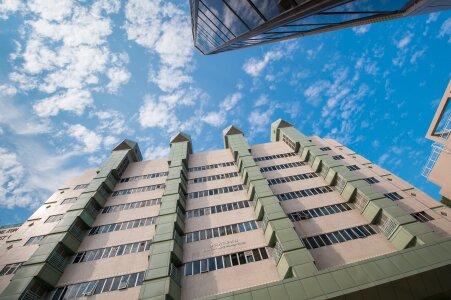
Founded in 1961, the Faculty of Science and Technology comprises five departments, including Biology, Chemistry, Computer Science, Mathematics, and Physics. It has around 2,500 undergraduate and postgraduate students.
Vision
The Faculty strives to play a leading role in science and technology education and advancement by delivering excellence in teaching and learning, conducting cutting-edge academic research, and proactively contributing to the development of society.
Mission
Comprehensive education
To provide students with a comprehensive education that fully develops their intellectual and personal strengths.
Research Excellence
To engage in innovative, high-impact and leading-edge research that is recognised internationally.
Scientific and Technological Literacy
To promote scientific and technological literacy in society.
The Faculty advocates cross-disciplinary approaches, with research activities focused on the environment and health, chemical biology, data analytics, and artificial intelligence. We offer exceptional opportunities for interdisciplinary ventures and collaborations, and aim to inspire students to achieve academic excellence to meet evolving professional and intellectual demands. Our central facilities use the latest technologies for the development and implementation of advanced and innovative research.

Dean, Faculty of Science and Technology
Chair Professor in Mathematics and Chair Professor in Data Science, Faculty of Science and Technology
Research Impact
The Faculty of Science and Technology has identified the Niche Research Area – Environment-Health & Data Analytics. Taking a few examples of our research impacts:
Our study of gene-environment interaction in plants underpinned a new strategy on rice irrigation that change the practices of millions of farmers in Chinese Mainland
Our leading academic contribution to investigating the impacts of emerging environmental stressors on ecological and animal health leads to the establishment of the “State Key Laboratory of Environmental and Biological Analysis"
The concept of environmental sustainability is disseminated through our organic farming and waste management strategies; those are broadly acknowledged by society
Using the chemical-biology approach, we have identified a non-invasive method for early diagnosis of human prostate cancers and the detection of Alzheimer’s disease biomarkers
Our colleagues have developed the laser technology to analyze the chemistry of antiques and paintings, and aluminum oxide nano-structures and films for modifications of surface structure and optical properties
Our artificial intelligence approaches to malaria elimination with China CDC provides spatio-temporal data analytics for epidemic prediction. The approach has been adopted as guidelines for front-line surveillance and control practices
The industries have widely adopted our big data research. We have a long-term partnership with the Hong Kong Observatory and Environment Protection Department of Hong Kong Government in data assimilation on air quality and weather forecast
Our Faculty is the heart for innovation and growth of the human culture. We deliver solutions for real environmental importance to safeguard the health of present and future generations.
Faculty Collaborative Research Areas
- AI for Sciences
- Chemical Biology & Molecular Modelling
- Epidemiological Studies & Experimental Models
- Omics & Health Informatics
University Central Laboratories/Institutes/Centres
- Advanced Life Sciences and Mass Spectrometry Laboratory
- Centre for Exercise Science and Medicine
- Frontier Translational Medical Research Institute
Research Institutes
- Croucher Institute for Environmental Sciences
- HKBU-RCEES Joint Institute of Environmental Sciences
- Institute of Advanced Materials
- Institute of Computational and Theoretical Studies (ICTS)
- Peking U - HKBU Joint Research Institute for Applied Mathematics*
Research Centres
- Applied Research Centre for Pearl River Delta Environment
- Beijing-HK-Singapore Joint Centre for Nonlinear and Complex Systems*
- Centre for Health Informatics*
- Centre for Mathematical Foundations of Artificial Intelligence
- Centre for Nonlinear Studies*
- Centre for Quantitative Systems Biology*
- High-Performance Cluster Computing Centre*
- Research and Development Centre for Natural Health Products^
- Research Centre of Excellence for Organic Electronics
- Statistics Research and Consultancy Centre*
Servicing Centres
Remarks:
* Research Institutes/Centres run under ICTS, which serve as an interdisciplinary research platform
^ The Centre is located in the Chinese Mainland
VIDEO
Introducing HKBU Faculty of Science and Technology