

Closing the loop: Turning plastic waste from a crisis into a resource
.png)
Plastic pollution is one of the defining environmental emergencies of our time. Between 2019 and 2024, Professor Zhao Jun of the Department of Biology and his team developed a suite of integrated technologies that addresses the problem from every angle: replacing petrochemical plastics with biodegradable alternatives, converting waste plastic into high-grade fuel, and removing microplastics from fertilisers before they reach our food.
Key Impacts:
- HK$11M+ in competitive grants secured to support the development of comprehensive plastic waste solutions
- 80%+ liquid fuel yield achieved by converting mixed waste plastic into high-grade fuel, with processing times cut to under 30 minutes
- 3,000+ Tonnes of CO₂ emissions reduced annually per 10-tonne-per-day treatment line, emitting 50% less greenhouse gas than traditional incineration
- 90%+ microplastics removed from raw food waste digestate, successfully eliminating approximately 1,400 microplastic particles per kilogram of fertilizer
- Policy Advisory & Industrialisation realized through partnerships with 4 industry collaborators to deploy processing equipment locally, alongside directly advising the Hong Kong government on waste treatment policies and biodegradable standards
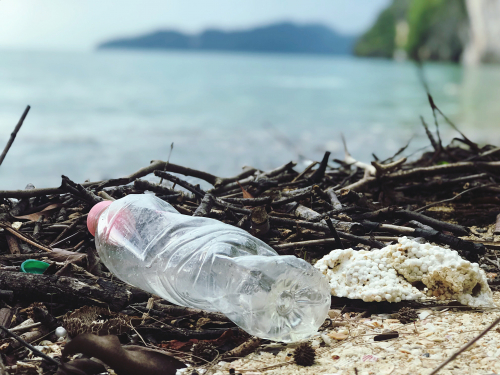
Every year, 400 million tons of plastic waste are produced globally, but only 9% is recycled, and an estimated 11 million tons enter aquatic ecosystems annually, so by 2050 there may be 937 million tons of plastic in the oceans. In Hong Kong, plastic is the second-largest solid waste stream.
"The numbers are overwhelming, but they also tell us something clearly," says Professor Zhao. "Recycling alone will never be enough. We need solutions that work at the source—how plastics are made—and, at the end of life, how waste is processed. Our team decided to tackle all three."
The first pillar of Professor Zhao's strategy addresses plastic production itself. Between 2020 and 2024, his team developed a "one-pot" process that converts sugars from renewable biomass into 2,5-diformylfuran and 2,5-furandicarboxylic acid—key building blocks for biodegradable polymers. The breakthrough was a novel metal-free catalyst made from biomass waste.
"We created the first metal-free catalytic system for converting carbohydrates into biodegradable polymer monomers," Professor Zhao explains. "Metal-free matters because it reduces cost and toxicity, making industrial scaling far more practical."
The research, funded by the National Natural Science Foundation of China, has attracted direct industry support. Two companies have provided R&D funding to facilitate industrial production of biodegradable plastics based on these findings.
"When a company puts its own money into your research, that's impact," Professor Zhao notes. "It means they see a path from the lab bench to the factory floor."
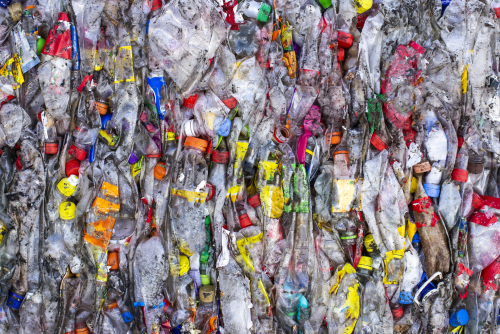
For plastic waste that already exists, Professor Zhao's team developed catalytic pyrolysis that converts mixed waste plastic into valuable liquid fuels. Supported by the Hong Kong Innovation and Technology Fund from 2020 to 2022, the team overcame traditional challenges using next-generation biomimetic catalysts.
The results transformed what was possible. Processing time dropped from several hours to under 30 minutes. Liquid fuel yield increased from 30–40% to over 80%. Over 99% of the output consists of gasoline and diesel-range oils, while heavy oil residue—a problematic byproduct—fell to less than 1%.
Professor Zhao's team developed catalytic pyrolysis that converts mixed waste plastic into valuable liquid fuels
When you can process more waste faster, get higher yields, and produce better fuel, recycling starts to make business sense
Professor Zhao Jun
The team developed equipment capable of processing 200–500 kilograms of mixed waste plastic per batch. It has now been deployed for operation at multiple locations, with four industry partners collaborating on industrialisation. The environmental impact is equally compelling: pyrolysis emits 50% less CO₂ equivalent than incineration. A 10-tonne-per-day treatment line can reduce more than 3,000 tonnes of CO₂ annually per installation.
"When you look at carbon reduction at that scale, you're not just managing waste anymore," Professor Zhao observes. "You're contributing to climate mitigation."
Perhaps the greatest hidden threat is microplastics. These tiny particles enter the soil through organic fertilisers made from food waste digestate, contaminate crops, and eventually reach human beings, and in a project supported by the Hong Kong Environmental Protection Department from 2022 to 2024, Professor Zhao's team made a troubling discovery.
"We found that raw food waste digestate contains approximately 1,400 microplastic particles per kilogram," Professor Zhao reports. "That's 1.4 million particles per ton of fertiliser going onto farmland. The polymers we identified—polypropylene, polystyrene, PET—are everywhere: takeaway containers, packaging, water bottles."
The solution was an optimised hydrothermal carbonisation method that removes more than 90% of microplastics by particle count, producing genuinely microplastic-free organic fertilisers.
"What this means in practice is that farmers can use these fertilisers without spreading plastic pollution into the soil," Professor Zhao explains. "It reduces the risk of microplastics entering the human food chain."
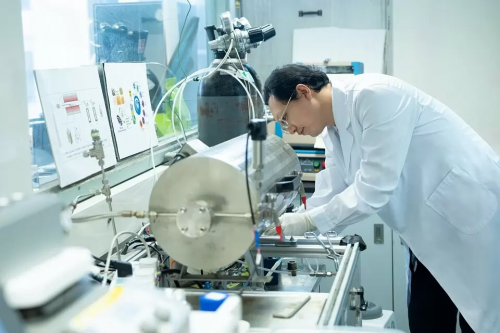
The team maintains close collaboration with local engineering partners, enabling the application of these findings to enhance environmental sustainability in Hong Kong.
Collectively, Professor Zhao's research has been supported by more than HK$11 million in competitive grants to develop better solution for plastic waste issue, and he has been invited to advise the Hong Kong government on waste treatment policy, biodegradable plastics standards, and soil microplastic research.
"The plastic waste problem isn't abstract," Professor Zhao concludes. "It's in Hong Kong's landfills, in our air from burning waste, in our soil from contaminated fertilisers. But we've now demonstrated solutions at every stage. The tools exist. The impact is measurable. The next step is deployment at scale."
Professor Zhao’s research profile: Jun ZHAO - Hong Kong Baptist University