

HKBU researchers achieve breakthrough with machine learning-powered blood test for early detection of nasopharyngeal carcinoma
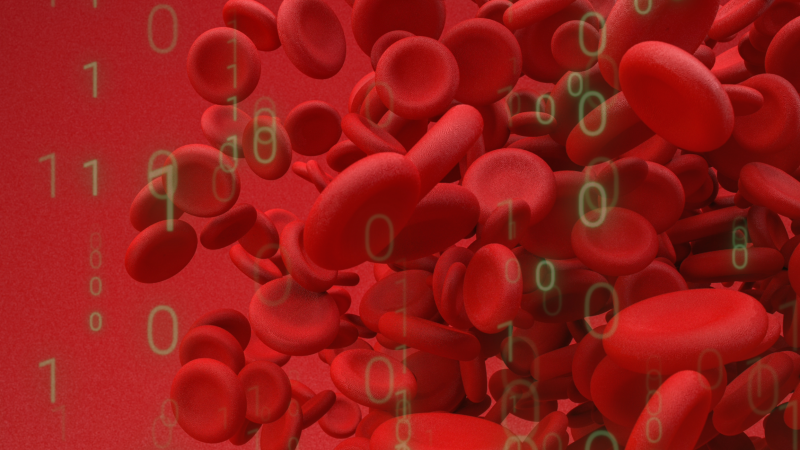
A research team led by Hong Kong Baptist University (HKBU) has made a major discovery in the early detection of nasopharyngeal carcinoma (NPC).
NPC is particularly prevalent among males in Southeast Asia. Early diagnosis remains challenging as symptoms are often subtle or absent, resulting in more than 70% of patients being diagnosed with locally advanced disease. Current diagnostic methods rely mainly on plasma Epstein-Barr virus (EBV) DNA detection or nasal endoscopy, which frequently miss early-stage cases. Moreover, EBV DNA may be undetectable in some patients during initial screening, leading to delayed diagnosis, poorer prognosis, and reduced survival rates.
The study was led by Professor Kelvin Leung, in collaboration with Associate Professor Lung Hong-Lok, from the Department of Chemistry. By analysing differences in blood plasma metal levels between healthy individuals and NPC patients and combining with machine learning, the team developed a novel diagnostic approach for the early detection of NPC.
Professor Leung said “By combining machine learning with metal profiling, we hope this innovative approach can offer new opportunity to NPC patients by detecting the disease at its earliest stage, allowing them to receive timely and effective treatments.”
Unlike EBV DNA, levels of essential and trace metals in the human body are tightly regulated. Significant changes in these concentrations may indicate underlying health issues and serve as complementary biomarkers. The team evaluated metallomics profiling and found significant differences in levels of 14 elements in blood plasma between healthy individuals and NPC patients. For instances, Tin (Sn) levels were elevated in the NPC group, while magnesium (Mg), phosphorus (P), manganese (Mn), cobalt (Co), nickel (Ni), zinc (Zn), iron (Fe), strontium (Sr), molybdenum (Mo), antimony (Sb), barium (Ba), thallium (Tl) and lead (Pb) were lower.
Moreover, the team combined metallomics profiling and machine learning on 48 participants (30 healthy individuals and 18 NPC patients with stage I or II diseases). The results showed that the model achieved near-perfect performance in distinguishing early-stage NPC patients from healthy individuals, demonstrating the potential of this technique, combining metal signatures with machine learning, to serve as a routine clinical testing method.
The integration of metallomics profiling and machine learning holds promise for the early diagnosis of other cancers in the future.
Full paper on Scientific Reports: https://www.nature.com/articles/s41598-025-33760-7

Professor Kelvin Leung
Faculty of Science and Technology
Previous News