


HKBU-led research maps glass scallop genome, revealing adaptation to extreme seeps
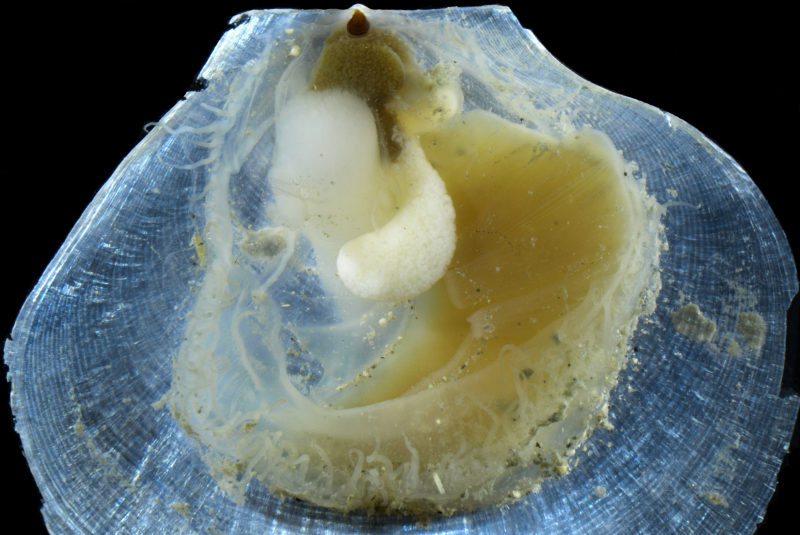
A research team led by Professor Qiu Jianwen from the Department of Biology has mapped the high-quality, chromosome-level genome of the glass scallop (Catillopecten margaritatus). Published in Nature Communications, their study shows the genetic blueprints that allow this unique blind mollusc to thrive around extreme deep-sea hydrocarbon seeps.
These seeps are extreme deep-sea environments characterised by high hydrostatic pressure, perpetual darkness, and toxic chemical fluids. Yet, they harbour vibrant ecosystems sustained by chemosynthesis, where specialised bacteria turn toxic compounds such as hydrogen sulphide into organic matter. The glass scallop is an extraordinary evolutionary marvel – it is the only scallop species known to host sulphur-oxidising bacteria on the surface of its gills, and this ectosymbiosis forms a crucial partnership where the bacteria generate food for the scallop in exchange for vital metabolic resources from their host.
While shallow-water scallops are known for their rows of tiny, complex mirror eyes, this deep-sea glass scallop lacks eyes entirely. Living at a depth of approximately 1,400 metres where sunlight is absent, maintaining visual systems is no longer viable, and genomic analysis by Professor Qiu’s team revealed that the glass scallop has repurposed its evolutionary toolkit. While it still retains ancient genetic pathways and key transcription factors involved in eye morphogenesis, it has lost most of its photoreception genes, instead evolving elongated mantle tentacles. This represents a profound shift from visual tracking to heightened tactile and chemical environmental sensing.
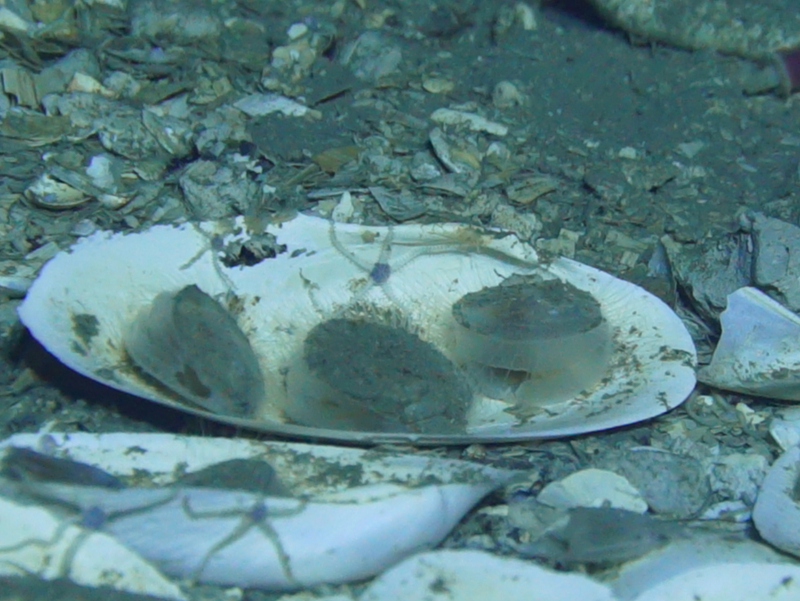
To manage its bacterial passengers and survive the harsh environment, the glass scallop has undergone significant genomic modifications. Instead of triggering an aggressive immune response to clear the foreign bacteria, the scallop’s genome reveals highly specialised innate immune mechanisms designed to recognise and accommodate specific bacterial partners on its gills. The scallop also has a reduced shell calcification strategy to conserve energy in the carbonate-deficient deep sea, alongside robust sulphide detoxification pathways. This includes a positively selected SQOR gene, which helps protect its tissues from environmental toxins.
By tracing the scallop's evolutionary tree, the researchers found that this lineage split from shallow-water scallops during the Early Devonian period roughly 410.6 million years ago, long before establishing its bacterial partnership, which suggests that its ancestors had already adapted to living in deep waters. The glass scallop also retains its ancestral ability to feed predatorily alongside its symbiotic partnership, and this dual lifestyle, known as mixotrophy, provides a vital evolutionary model, showing how organisms colonised and adapted to the rich, mysterious landscapes of our deep oceans.
Full research paper: https://www.nature.com/articles/s41467-026-71169-6
Professor Qiu’s research profile: https://scholars.hkbu.edu.hk/en/persons/QIUJW