

HKBU’s Department of Biology shows how nanosensors can detect plant stress before it is visible
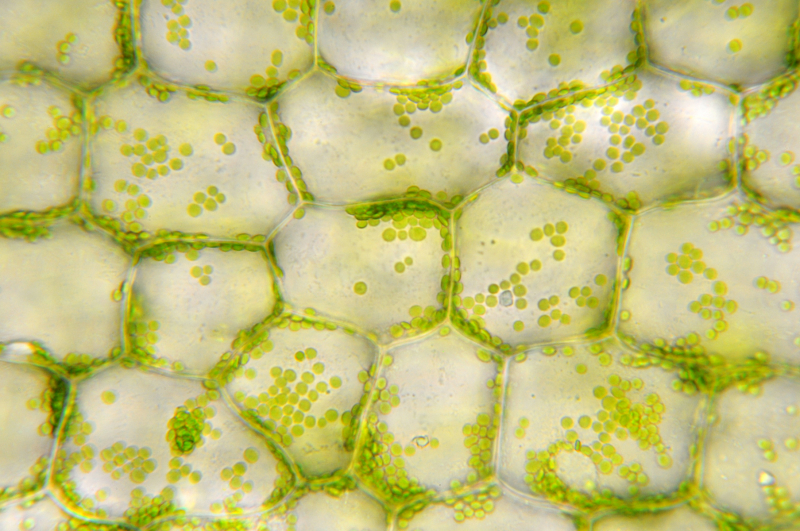
Plants transmit information through a dynamic mixture of airborne chemicals known as volatile organic compounds (VOCs). This serves as a plant’s distress signal when under environmental stress, such as drought, pests, or disease.
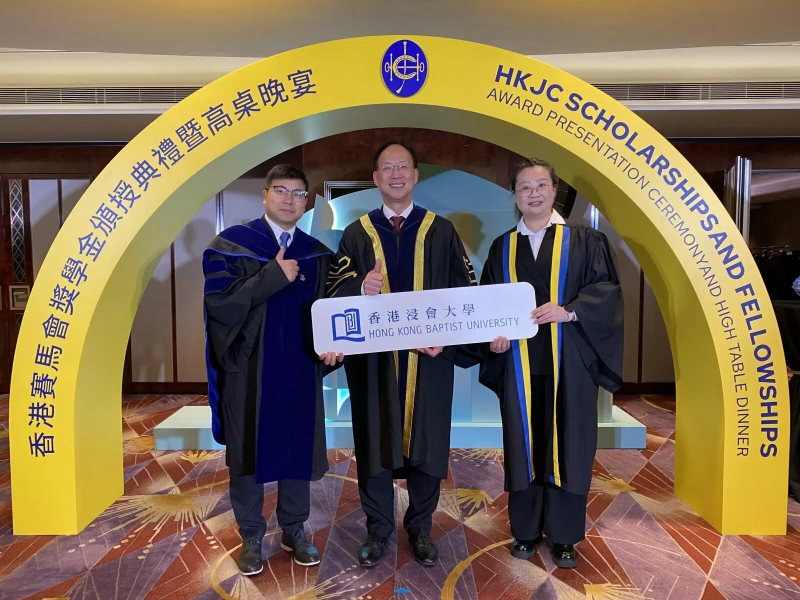
Professor Alex Wai, President and Vice-Chancellor of HKBU (center) poses for a photo with Dr Di Xueni (right), a Postdoctoral Research Fellow in the Department of Biology who is recognised as JC STEM Early Career Research Fellowship 2024/25 and her supervisor, Professor Liao Pan (left) from the Department of Biology
Assistant Professor Liao Pan and Dr Di Xueni from the Department of Biology, with collaborators from Huazhong Agricultural University, Guizhou University, and institutions in Egypt and Sri Lanka, have co-authored the review “Nanoarchitectures-powered volatile organic compound sensors enable real-time monitoring and early warning in sustainable agriculture”.
It says that when cells are damaged, they release internal alarm molecules that trigger a cascade inside the plant, activating the hormones and enzymes that ultimately produce this telltale blend of gases; in effect, a chemical warning system playing out in real time. The difficulty lies in detecting those signals quickly and accurately, before they drift away on the breeze without anyone noticing.
The traditional methods, which separate and identify gases using techniques such as gas chromatography and mass spectrometry, can detect these chemical signals with great precision, but require bulky laboratory equipment, trained specialists, and lengthy processing, which makes them impractical for continuous use in a farmer’s field.
Pests, disease, and environmental stress destroy more than half global crop production every year, leading to losses of a staggering US$ 220 billion. By the time a farmer spots yellowing leaves or wilting stems, the damage is usually already done. What if that distress call could be detected before any visible symptom appears?
The research team looked at the growing effort to build nanoscale sensors that detect plant VOC signals in real time, wherever the crop is growing. One system described in the review uses cysteine-coated gold nanoparticles in a portable colour-sensing array connected to an ordinary smartphone. When VOCs from an infected tomato plant interact with the sensor, its colour changes, and the phone analyses that shift to identify the chemical pattern. The system detected late blight roughly two days after infection, well before visible symptoms appeared, and achieved at least 95% diagnostic accuracy when validated against PCR testing.
However, that kind of speed and accuracy comes with a catch. Humidity, in particular, is a stubborn obstacle for many sensors because moisture in the air may interfere with the chemical reactions used to detect VOCs. One study tackled this problem with a sensor designed to diagnose wheat scab, a destructive fungal disease. Researchers encased the sensing material in a water-repelling outer layer, allowing the sensor to continue working at 100% relative humidity. The sensor could detect infected wheat one day after exposure.
Earlier detection could support more informed decisions on irrigation, disease control, and pesticide use, and help farmers to protect yields while reducing unnecessary chemicals and any waste of resources.
The review is also clear about what stands in the way. Temperature, humidity, and background gases can all disrupt sensor performance, while manufacturing costs, long-term durability, and the absence of consistent testing standards still limit how quickly these technologies can move from the laboratory into the field.
To close that gap, the researchers call for closer collaboration among plant scientists, materials researchers, engineers, data specialists, and farmers themselves. Further field testing and shared standards mean that learning to read the chemical language of plants could become a genuine part of a more responsive and sustainable agricultural system, one in which a crop’s earliest signs of distress no longer go unheard.
Full paper on Coordination Chemistry Reviews: https://doi.org/10.1016/j.ccr.2025.217169
Professor Liao’s research profile: https://scholars.hkbu.edu.hk/en/persons/PANLIAO
Article about Dr Di Xueni's JC STEM Early Career Research Fellowship: From lab to society: HKBU scientist celebrates JC STEM Fellowship with global researchers at HKJC award ceremony | HKBU Research
.png)
Professor Liao Pan
Faculty of Science and Technology