

HKBU’s latest research identifies potential therapeutic target for safer osteoporosis treatment

Led by Professor Lyu Aiping, Vice-President (Research and Development) and Professor Zhang Ge (Chair Professor, School of Chinese Medicine), a research team at HKBU has discovered a key molecular mechanism that offers new directions for developing safer osteoporosis treatments. The research findings were published in the international journal Bone Research.
While anti-sclerostin therapies have shown promise in stimulating bone formation and improving bone density, concerns over potential cardiovascular side effects, including heart attack and stroke, have limited their clinical use. There is therefore an urgent need for safer and more precise therapeutic strategies to address these conditions.
The research shows that a specific region of the protein sclerostin, known as loop3, suppresses bone formation through its binding interaction with a receptor called LRP4 in osteoblasts, the cells responsible for building new bone. The findings suggest that selectively blocking this interaction could promote bone growth without increasing some of the cardiovascular concerns associated with current therapies.
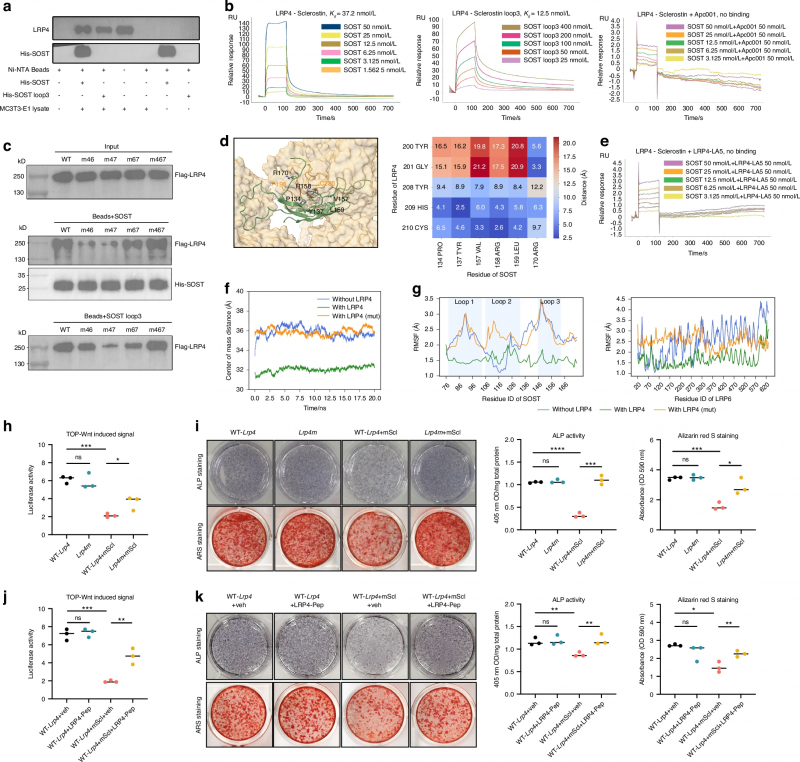
Figure 1: Blockade of sclerostin loop3-LRP4 interaction diminished the antagonistic effects of sclerostin on Wnt/β-catenin signaling and osteogenic potential in osteoblasts in vitro.
Sclerostin is a naturally occurring protein that inhibits bone formation by antagonising the Wnt/β-catenin signalling pathway, which drives the growth and repair of bone tissue. Current anti-sclerostin therapies, such as Romosozumab, primarily target loop2 of the sclerostin protein. However, these treatments have been associated with cardiovascular risks, prompting regulatory warnings from agencies such as the U.S. Food and Drug Administration and the European Medicines Agency.
In this study, the researchers discovered that sclerostin’s loop3 region binds specifically to the LRP4 receptor on osteoblasts. Acting as an anchor, this interaction enables sclerostin to bind more effectively to another receptor, LRP6, thereby suppressing the Wnt/β-catenin signalling pathway. Using genetically modified mouse models and a custom-designed blocking peptide (LRP4-Pep), the team demonstrated that disrupting the loop3-LRP4 interaction led to significantly enhanced bone formation, increased bone mass and improved bone strength. Importantly, the study suggests that selectively targeting this interaction may preserve the cardiovascular protective functions of sclerostin, which appear to be independent of loop3.
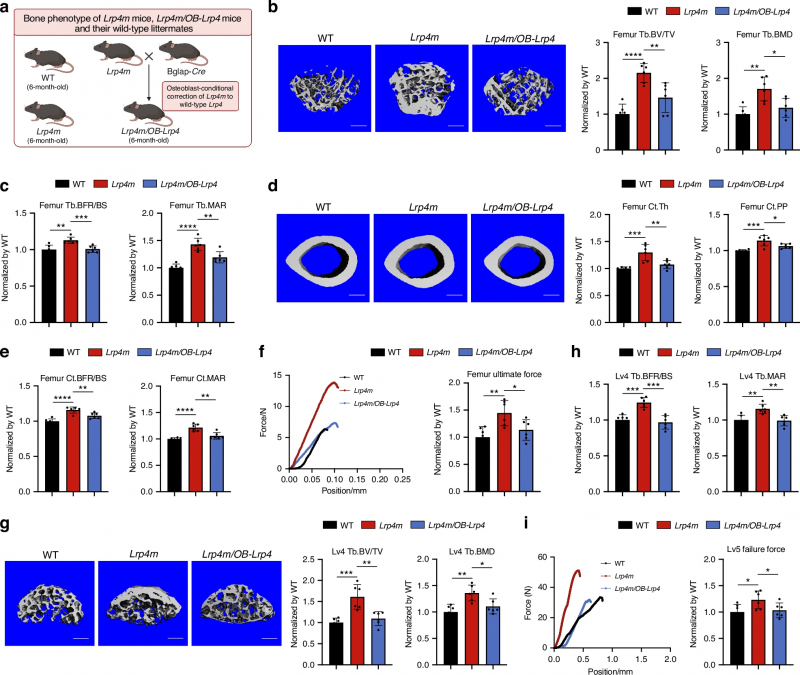
Figure 2: The bone phenotypes of Lrp4m mice, Lrp4m/OB-Lrp4 mice and WT littermates. a The diagram of experimental design.
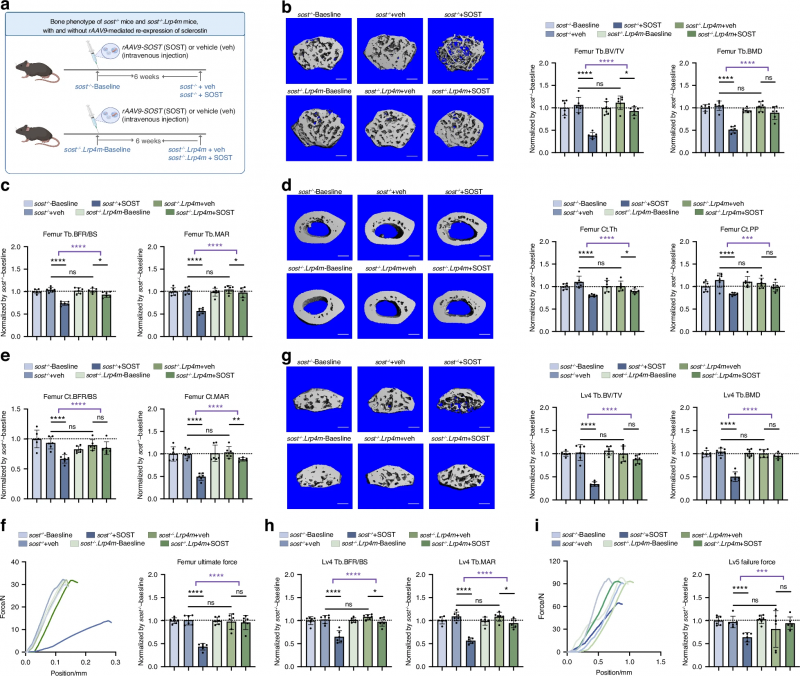
Figure 3: The bone formation of sost−/− mice and sost−/−.Lrp4m mice, with and without rAAV9-mediated re-expression of sclerostin.
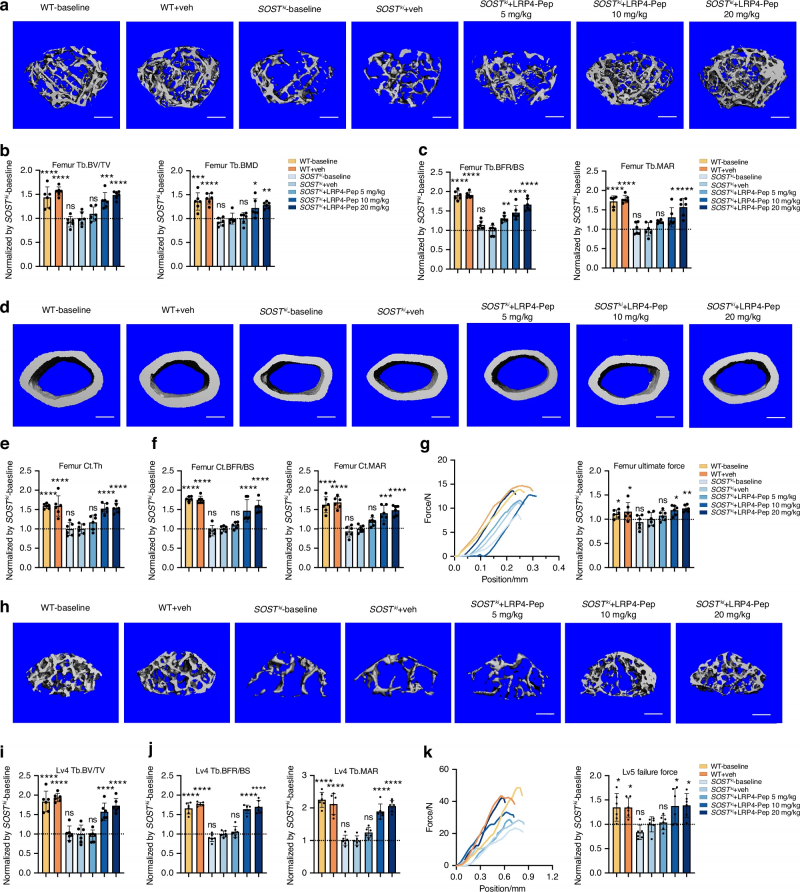
Figure 4: The influence of the exogenous LRP4-Pep in the antagonistic effect of sclerostin on bone formation in SOSTki mice.
The research was conducted by scientists from the Law Sau Fai Institute for Advancing Translational Medicine in Bone and Joint Diseases at Hong Kong Baptist University in collaboration with researchers from The Chinese University of Hong Kong, Shanghai Jiao Tong University School of Medicine, Semmelweis University and other international institutions.
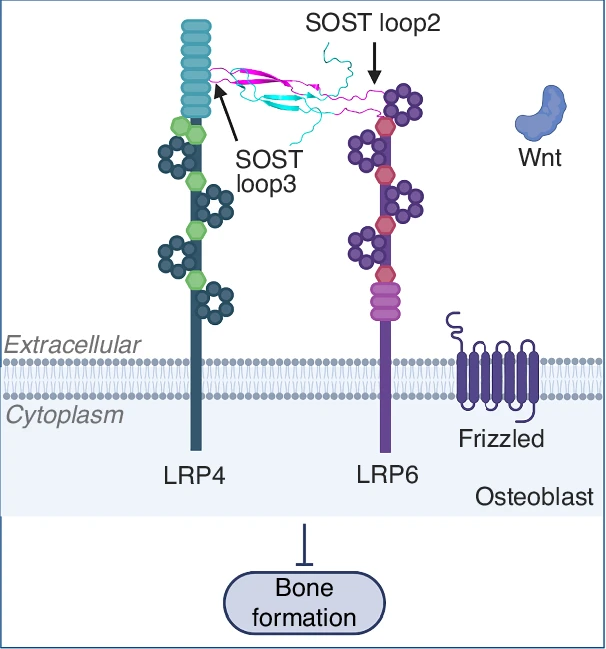
Figure 5: Schematic diagram showing the findings on the important anchor role of osteoblastic sclerostin loop3-LRP4 interaction in facilitating scleorstin-LRP6 interaction, antagonizing Wnt/β-catenin signaling and inhibiting bone formation
Full research paper: https://www.nature.com/articles/s41413-026-00511-x
More about Professor Lyu Aiping's research profile: Aiping LYU - Hong Kong Baptist University
More about Professor Zhang Ge's research profile: Ge ZHANG - Hong Kong Baptist University