

Elevating chronic disease care: Communication interventions to enhance symptom management in patients with irritable bowel disease
Project Description
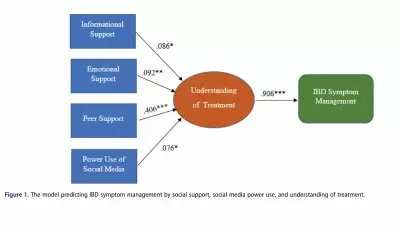
Professor Zhong Bu’s research on communication interventions for managing chronic conditions addresses the critical need for effective symptom management in adult and teen patients with irritable bowel disease (IBD). By developing communication interventions, he has enhanced treatment understanding, patient compliance, and symptom control. Collaborating with physicians and nurses in gastroenterology, his work highlights the role of information processing and social media in providing informational, emotional, and peer support. This approach has built patient trust in doctors and improved symptom management. Tailored communication interventions cater to diverse cultural needs, enhancing chronic disease care. Over the past decade, his research has positively impacted nearly 1,000 IBD patients in the United States and China, leading to better treatment outcomes and improved patient compliance. By advancing communication methodologies, his studies address the complexities of measuring social support in online communities, advocating for a multi-dimensional approach that enhances existing metrics (Wu et al., 2024). This research not only contributes to academic knowledge but also demonstrates real-world applicability, significantly impacting patient care and mental health management.
Uniqueness of the Project
The project is unique in its comprehensive integration of communication science and health interventions. It pioneers sophisticated approaches to understanding and improving social support systems within online communities. This multi-dimensional perspective is crucial for accurately assessing and enhancing social support, distinguishing his work from traditional methodologies. His interventions are directly applied to diverse populations, showcasing the project's versatility and practical impact.
Effects on Patients and Caregivers
Zhong's interventions have already shown tangible benefits. In 2023, over 1,500 college students across seven Beijing universities reported improved mental well-being after applying his research findings (Zhong & Xie, 2023). Similarly, nearly 500 IBD patients in hospitals in the U.S. and China experienced enhanced understanding of their treatment and improved symptom management (Zhao et al., 2021; Zhong et al., 2023). These outcomes underscore the empowerment of patients and caregivers, enabling more active participation in healthcare and enhancing overall health outcomes.
Impact on Policymaking
Zhong’s research offers valuable insights for policymakers by highlighting the efficacy of communication interventions in managing chronic health conditions. By demonstrating significant improvements in patient management and well-being, the findings advocate for the integration of these strategies into health policy frameworks. This can lead to the development of policies that prioritise comprehensive social support networks and patient-centred care, ultimately improving healthcare delivery systems.
The project’s contributions extend to media and public discourse by promoting evidence-based narratives around chronic diseases and mental health. By improving the way social support is measured and communicated, Professor Zhong’s work encourages media outlets to adopt more informed and nuanced reporting practices. This can facilitate a more accurate public understanding of these issues, reducing stigma and fostering a supportive environment for affected individuals.
Project Investigator
Professor ZHONG Bu (Department of Interactive Media)
Project Collaborators
Dr ZHU Yuner (Department of Interactive Media)
Dr Lola XIE (Department of Communication Studies)
Publications
- Wu, X.-K., Zhou, Y.-Y., & Zhong, B. (2024). Measuring social support for depression on social media: A multifaceted study on user interaction and emotional spread. Telematics and Informatics, 89, Article 102120. https://doi.org/10.1016/j.tele.2024.102120
- Yang, F., Zhong, B., Kumar, A., Chow, S.-M., & Ouyang, A. (2018). Exchanging social support online: A longitudinal social network analysis of irritable bowel syndrome patients' interactions on a health forum. Journalism & Mass Communication Quarterly, 95(4), 1033-1057. https://doi.org/10.1177/1077699017729815
- Zhao, J., Han, H., Zhong, B., Xie, W., Chen, Y., & Zhi, M. (2021). Health information on social media helps mitigate Crohn's disease symptoms and improves patients' clinical course. Computers in Human Behavior, 115, 1-10.
- Zhong, B. (2023). Going beyond fact-checking to fight health misinformation: A multi-level analysis of the Twitter response to health news stories. International Journal of Information Management, 70, 1-11, Article 102626. https://doi.org/10.1016/j.ijinfomgt.2023.102626
- Zhong, B., & Liu, Q. (2021). Medical insights from posts about irritable bowel syndrome by adolescent patients and their parents: Topic modeling and social network analysis. Journal of Medical Internet Research, 23(6), 1-13, Article e26867. https://doi.org/10.2196/26867
- Zhong, B., Xie, W., Kempton, S. D., Zhi, M., & Zhao, J. (2023). Health information processing bolsters symptom management of chronic conditions in a cross-cultural setting. Health Communication, 1-10. https://doi.org/10.1080/10410236.2023.225094