

(Mis)communication, trust, and information environments: A comparative study of the COVID-19 “infodemics” in four Chinese societies
Project Description
The project is interdisciplinary, bringing together scholars from media and communication, public health, and engineering. The team collaboratively investigated the origins, spread, and negative impacts of COVID-19 misinformation across four Asian societies: Chinese Mainland, Hong Kong, Singapore, and Taiwan.
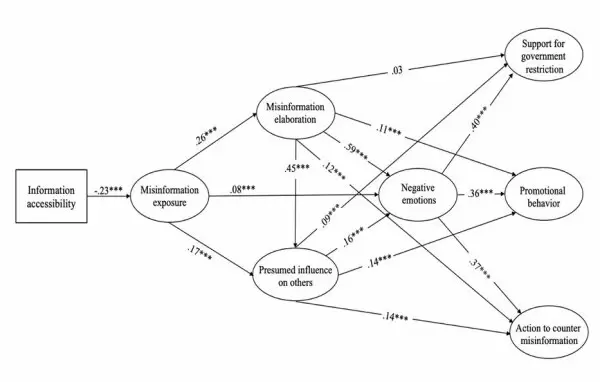
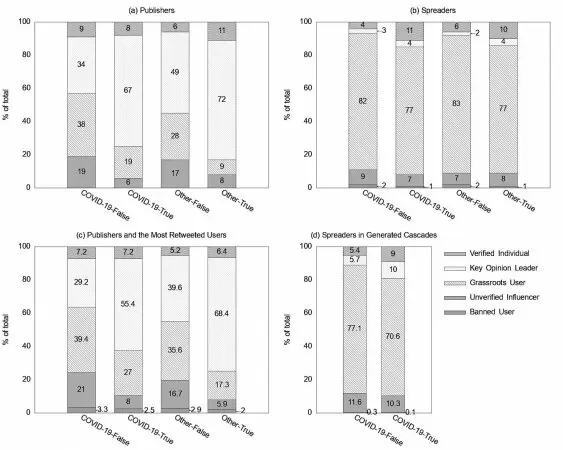
The cross-societal project employed various research methods, including big data analytics, large-scale surveys, online experiments, and group interviews, to triangulate results regarding how exposure to and the spread of COVID-19 misinformation affected citizens' risk perceptions, beliefs, attitudes, and knowledge. The findings reveal that encountering and engaging with false information about COVID-19 on social media platforms contributed to misconceptions about the pandemic, anti-vaccine sentiments, and a lack of knowledge about the virus. Additionally, key findings highlight the critical role of digital information access in shaping public exposure to misinformation and its subsequent effects on societal well-being. Specifically, unequal access to digital information was linked to the uneven spread of misinformation, leading to varied public harms. In societies with restricted access, misinformation proliferated more widely, exacerbating negative emotions and anti-vaccine attitudes. In contrast, in cities like Taipei, where the flow of information is more unrestricted, encounters with misinformation were fewer, resulting in reduced public harm.
Finally, the project reveals that institutional trust is crucial in countering the negative effects of misinformation, underscoring the importance of empowering citizens with knowledge. Educated individuals are more skilled at fact-checking and combating misinformation, highlighting the need for public education campaigns to enhance infodemic literacy. The findings suggest that fostering a well-informed public is essential for flattening the misinformation curve.
In summary, the project provides valuable insights into the socio-political dynamics of misinformation spread and control, advocating for policies that enhance information access, transparency, and public education to mitigate the societal impacts of misinformation.
Based on the rich findings, Professor Wei Ran has published three op-ed articles in Ming Pao, a prominent newspaper in Hong Kong, to convey the research findings to the public. In 2024, Professor Wei Ran and co-principal investigators published an English book with Routledge titled Miscommunicating the COVID-19 Pandemic: An Asian Perspective. This book addresses the infodemic — the rapid and widespread diffusion of false, misleading, or inaccurate information about the disease and its ramifications — triggered by the COVID-19 pandemic.
Additionally, Professor Wei Ran and Professor Lo Ven-Hwei edited a Chinese book published by 五南出版社, titled 新冠疫情中的傳媒角色:亞洲華人社會的實證研究. This book covers three key topics in the context of the COVID-19 pandemic: (1) media content, including digital content, (2) the relationship between media exposure and attitudes toward vaccines, and (3) the dissemination of misinformation and its social impacts.
Project Investigator
Professor WEI Ran (Department of Communication Studies)
Project Coordinators
- The Chinese University of Hong Kong
- City University of Hong Kong
- National Chengchi University
- Nanyang Technological University
Funding/Award
- Research Grants Council - Collaborative Research Fund
- The Chinese University of Hong Kong - CUHK Internal Research Grant
Publications
- Wei, R., Lo, V. H., Zhang, X., Lu, M., & Qiu, J. L. (2024). Examining the impact of digital information environments, information processing, and presumed influence on behavioral responses to COVID-19 misinformation in Asia. New Media & Society, 14614448241252391. https://doi.org/10.1177/146144482412523
- Freshwater, D., Mu, J., Rangsivek, K., Gelberb, K., Demartinib, G., Goldwater, M., ... & Huang, C. Y. H. (2024). A Misinformation Resilience Index to Inform Policy and Practice. https://researchspace.auckland.ac.nz/docs/uoa-docs/rights.htm
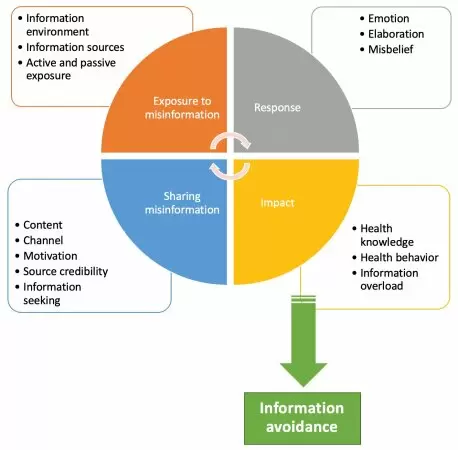
- Wei, R., Lo, V. H., Guo, J., & Yu, W. (2024). An Unhelpful Chain: Antecedents and Consequences of COVID-19 News Avoidance in China and Singapore. Journal of Broadcasting & Electronic Media, 1-20. https://doi.org/10.1080/08838151.2024.2394200
- Wei, R., Lo, V. H., Zhang, X., Guo, J., & Yu, W. (2024). A comparative study of public support for the zero-COVID policy in Beijing, Taipei and Singapore: The role of media attention and perceived social impact. International Journal of Public Opinion Research, 36(3). https://doi.org/10.1093/ijpor/edae040
- Yu, W., Payton, B., Sun, M., Jia, W., & Huang, G. (2023). Toward an integrated framework for misinformation and correction sharing: A systematic review across domains. New Media & Society, 25(8), 2241-2267. https://doi.org/10.1177/14614448221116569
- Zhu, Y., Tang, J., Tang, X., Wang, S., & Lim, A. (2021). 2-hop+ sampling: Efficient and effective influence estimation. IEEE Transactions on Knowledge and Data Engineering, 35(2), 1088-1103. https://doi.org/10.1109/TKDE.2021.3093934