

Impairment of autophagy-lysosomal pathway in Parkinson's disease: Novel roles of HMGB1-TFEB interplay and therapeutic implication of Chinese medicine compounds
Project Description
Parkinson’s disease (PD) is the most common neurodegenerative movement disorder afflicting 7-10 million people worldwide. Progressive loss of dopaminergic neurons and accumulation of abnormal protein aggregates including α-synuclein (SNCA) in the midbrain are the major pathological hallmarks of PD. Unfortunately, current drugs for PD only can replenish dopamine levels, without stopping the disease progression. Developing disease-modifying drugs that can stop the pathological progression of PD becomes a real-world challenge.
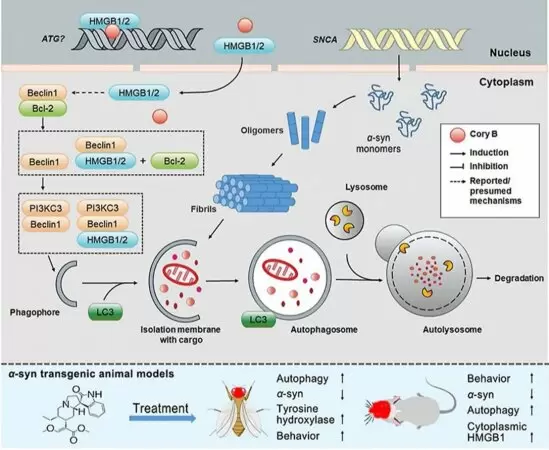
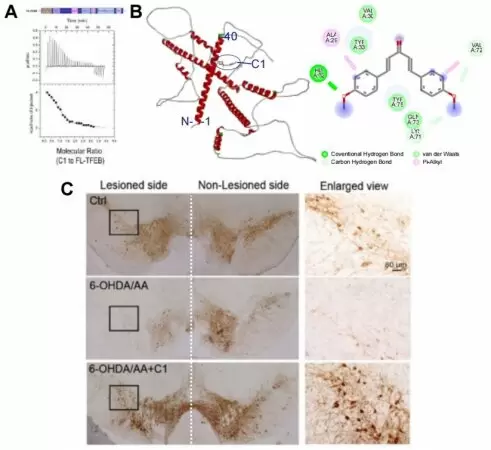
The autophagy–lysosomal pathway (ALP) is a cellular machinery responsible for the degradation of protein aggregates and damaged organelles. Transcription factor EB (TFEB) and high-mobility group box 1 (HMGB1) are two positive regulators of ALP. Notably, reduced levels of TFEB and HMGB1 were observed in the nuclei of dopaminergic neurons from PD patients. We and other investigators have previously demonstrated how SNCA and PD-causing neurotoxins inhibit ALP via deregulating TFEB or HMGB1. Importantly, we have discovered some natural compounds or their derivatives from Chinese medicine that can target HMGB1 or TFEB to promote ALP, thus attenuating PD pathology in animal models. However, whether both HMGB1 and TFEB need to be activated for potential PD therapy and whether a combination of Chinese medicine compounds targeting both HMGB1 and TFEB can hold better promise for PD therapy have not been investigated.
In this proposal, by employing interdisciplinary and innovative approaches, we will fulfil three specific objectives to address these important questions: (1) To validate whether HMGB1 is a transcriptional co-activator of TFEB; (2) To dissect the roles of HMGB1-TFEB interaction in ALP impairment induced by overexpressed SNCA and the neurotoxin MPTP in vitro and in vivo; and 3) To evaluate the protective potential of combined Chinese medicine compounds targeting the HMGB1-TFEB complex in animal models of PD.
The successful accomplishment of this study will achieve significant impacts in the short and long terms. In the short term, the achievements of this study will provide academic value by advancing our current understanding of the regulatory mechanisms of HMGB1-TFEB complex-mediated ALP in the pathogenesis of PD. In the long term, this study will reveal translational and therapeutic values. In the long term, Chinese medicine compounds specifically targeting the TFEB-HMGB1 complex may be developed, and their efficacy and safety will be confirmed in PD animal models. Finally, new drugs targeting the HMGB1-TFEB complex may be approved for the treatment of PD, which will benefit millions of PD patients all over the world.
Project Investigator
Professor LI Min (School of Chinese Medicine)
Project Collaborators
- Ju-Xian Song (Guangzhou University of Chinese Medicine)
- Diego-Luis Medina (Federico II University)
Funding/Award
- Research Grants Council - General Research Fund
Publications
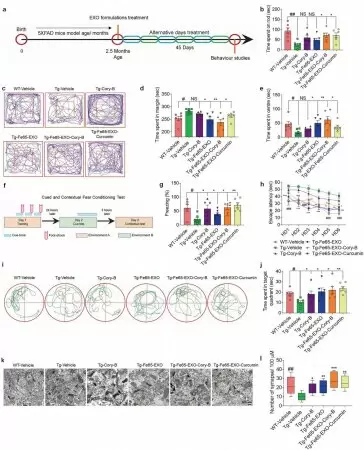
- Iyaswamy A, Thakur A, Guan XJ, Krishnamoorthi S, Fung TY, Lu K, Gaurav I, Yang Z, Su CF, Lau KF, Zhang K, Ng RC, Lian Q, Cheung KH, Ye K, Chen HJ, Li M*. Fe65-engineered neuronal exosomes encapsulating corynoxine-B ameliorate cognition and pathology of Alzheimer's disease. Signal Transduct Target Ther. 2023 Oct 23;8(1):404. doi: 10.1038/s41392-023-01657-4. PMID: 37867176; PMCID: PMC10590775. https://pubmed.ncbi.nlm.nih.gov/37867176/
- Guan XJ, Deng ZQ, Liu J, Su CF, Tong BC, Zhu Z, Sreenivasmurthy SG, Kan YX, Lu KJ, Chu CP, Pi RB, Cheung KH, Iyaswamy A, Song JX, Li M*. Corynoxine promotes TFEB/TFE3-mediated autophagy and alleviates Aβ pathology in Alzheimer's disease models. Acta Pharmacol Sin. 2024 May;45(5):900-913. doi: 10.1038/s41401-023-01197-1. Epub 2024 Jan 15. PMID: 38225393; PMCID: PMC11053156. https://www.nature.com/articles/s41401-023-01197-1
- Zhu Q, Song J, Chen JY, Yuan Z, Liu L, Xie LM, Liao Q, Ye RD, Chen X, Yan Y, Tan J, Heng Tan CS, Li M*, Lu JH*. Corynoxine B targets at HMGB1/2 to enhance autophagy for α-synuclein clearance in fly and rodent models of Parkinson's disease. Acta Pharm Sin B. 2023 Jun;13(6):2701-2714. doi: 10.1016/j.apsb.2023.03.011. Epub 2023 Mar 15. PMID: 37425041; PMCID: PMC10326294. https://pubmed.ncbi.nlm.nih.gov/37425041/