

Ruminococcus gnavus plays a pathogenic role in diarrhea-predominant irritable bowel syndrome by increasing serotonin biosynthesis
Project Description
Diarrhoea-predominant irritable bowel syndrome (IBS-D) is the most prevalent functional bowel disorder and is characterised by gastrointestinal symptoms such as stool irregularities, abdominal discomfort, and bloating. Previous research has demonstrated that increased production of serotonin, a key neurotransmitter involved in regulating gut motility, contributes to the gastrointestinal symptoms experienced by patients with IBS-D. It has also been shown that gut microbiota plays a role in regulating serotonin levels. However, the specific bacterial species and the molecular mechanisms by which the gut microbiota modulate serotonin production remain unclear.
To explore treatment options for IBS-D, the research group screened thousands of food components and their breakdown products in the faecal samples of IBS-D patients. They identified two aromatic trace amines, phenethylamine and tryptamine, produced by microbial digestion of dietary proteins, which were highly enriched in the faeces and closely associated with diarrhoeal severity. The team also found that the gut bacterium Ruminococcus gnavus was present in higher amounts in IBS-D samples and was the primary producer of these amines. When mice were transplanted with this bacterium, they developed IBS-D-like symptoms, suggesting that phenethylamine and tryptamine can trigger IBS-D. Additionally, the team discovered that these amines can stimulate serotonin production, leading to increased gut motility in IBS-D.
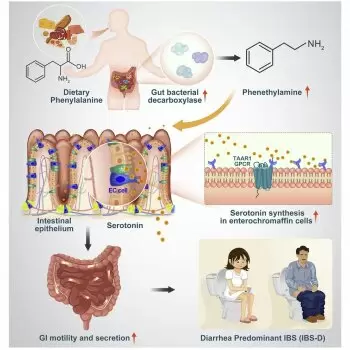
The research team investigated how phenethylamine and tryptamine cause IBS-D. They discovered that these compounds stimulate serotonin production from enterochromaffin cells by activating the trace amine-associated receptor (TAAR1), leading to increased gut motility and secretion disorders typical of IBS-D. Inhibiting TAAR1 with a specific inhibitor effectively alleviated diarrhoeal symptoms in mice with IBS-D faecal transplants, suggesting that targeting the phenethylamine/tryptamine/TAAR1 pathway could be a promising therapeutic approach. Additionally, a low-protein diet deficient in phenylalanine reduced gut motility in mice by decreasing microbial production of phenethylamine and tryptamine. Foods low in phenylalanine, such as fresh fruits, vegetables, and bread, may help manage IBS-D symptoms. This research provides new insights and potential treatments for IBS-D, offering hope for improved patient outcomes.
Project Investigator
Professor WONG Hoi Leong, Xavier (School of Chinese Medicine)
Project Collaborators
- Professor BIAN Zhaoxiang (School of Chinese Medicine)
- University of Hong Kong
- University of Chicago, the US
Funding/Award
- Research Grants Council - General Research Fund
Publication
Zhai L, Huang C, Ning Z, Zhang Y, Zhuang M, Yang W, Wang X, Zhang EL, Xiao H, Zhao L, Lam YY, Chow CFW, Huang J, Yuan S, Chan KM, Yuan CS, Lau JYN, Wong HLX# , Bian Z# (2023) Ruminococcus gnavus plays a pathogenic role in diarrhea-predominant irritable bowel syndrome by increasing serotonin biosynthesis. Cell Host & Microbe, 31, 33-44 e35 https://linkinghub.elsevier.com/retrieve/pii/S1931-3128(22)00562-5