

Beyond the trenches: Rewriting South China's war history from the sky and sea
h.png)
A fuller picture of history emerges when we look beyond traditional perspectives to include often-overlooked dimensions. Groundbreaking research by Professor Kwong Chi-man (Academy of Chinese History, Religion, and Philosophy, Faculty of Arts and Social Sciences) re-examines the Second Sino-Japanese War (1937–1945) through the other lens of naval and air operations in South China. Published in the renowned journal New History, the study argues that the South China theatre was not merely a secondary ground front but a vital strategic hub that shaped the broader conflict across the Asia-Pacific.
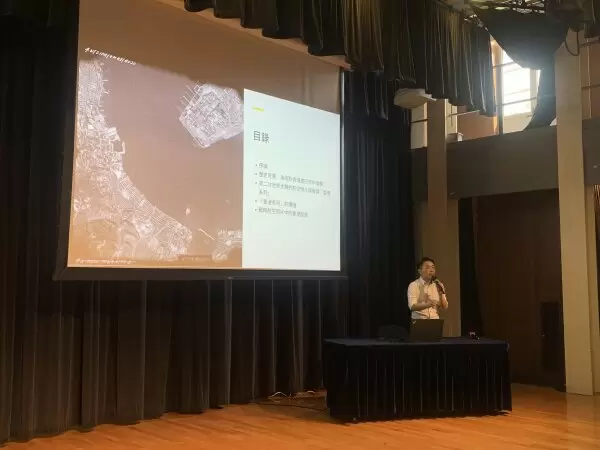
Titled “South China in the Second Sino-Japanese War from the perspective of naval and air warfare: Strategic and operational insights, 1937-1945,” the research traces how different regions, and later the Allied forces, utilised South China’s coastal regions, airfields, and maritime routes to project power, disrupt supply lines, and contest control of the South China Sea. Despite the absence of large-scale ground battles, the region became a persistent arena for air raids, naval blockades, and logistical warfare. The study also sheds light on the complex interplay between ground and air operations and reframes South China as a logistical hinge.
The study provides a transformative framework for understanding the Second Sino-Japanese War, challenging the focus on major land battles by highlighting the decisive naval-air theatre in South China. Its significant impact lies in providing a new analytical lens for military history, encouraging a shift towards integrated, multi-domain analyses of historical conflicts. By showing how sustained logistical pressure shapes war outcomes, the study provides a methodology applicable to other research, leading to a more comprehensive understanding of warfare.
“By moving beyond the seemingly decisive battles on land, we can achieve a more comprehensive understanding of how the Sino-Japanese War in regional and global contexts. By embracing different perspectives and methods, we can move beyond gap-filling to obtain a more thorough understanding of the past, one that illuminates the very foundations of our present,” Professor Kwong concludes.

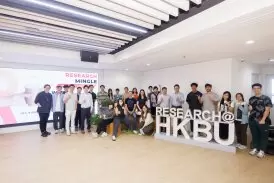
Professor Kwong Chi Man (center front row) with the audience of public seminar at Jao Tsung-I Academy on 12 October 2025.
Professor Kwong, a leading expert in East Asian military history, with a strong interest in Modern Military History, 1500-1945, Modern Chinese and East Asian History, 1860-1949, and British Military Presence in Hong Kong, 1840-1997. Among his recent projects is an interactive map detailing the Japanese occupation of Hong Kong from 1941 to 1945, which received by peers as a groundbreaking contribution for its innovative application of technology to historical study. Furthermore, Professor Kwong is the author of acclaimed books such as *Hongkongers in the British Armed Forces, 1860-1997* and *War and Geopolitics in Interwar Manchuria*. His work also featured in journals like Modern Asian Studies, Journal of Military History, Journal of Chinese Military History, and War and Society, bringing a detailed focus to the region's complex past.
Click here for more details of the research findings.
Previous News