


Hair analysis as a potential tool for early risk assessment of gestational hypothyroidism
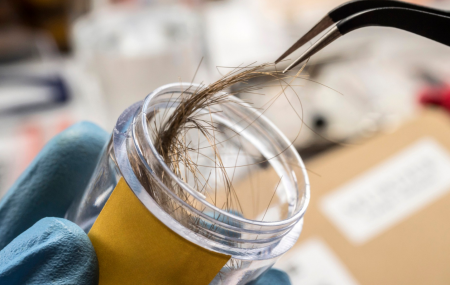
A new method reveals trace element patterns in maternal hair that are associated with gestational hypothyroidism up to two months before clinical diagnosis, according to the latest HKBU research.
Led by Professor Kelvin Leung, Head and Professor of the Department of Chemistry, the research employs laser ablation-inductively coupled plasma-mass spectrometry (LA-ICP-MS) to examine maternal hair samples. It reveals a significant association between trace elements and gestational hypothyroidism.
This technique can detect temporal shifts in levels of endocrine-disrupting metals (EDMs) and nutritional trace metals (NTMs) up to two months prior to diagnosis, marking a breakthrough in using trace element monitoring for prenatal care to mitigate the risk of thyroid dysfunction during pregnancy.
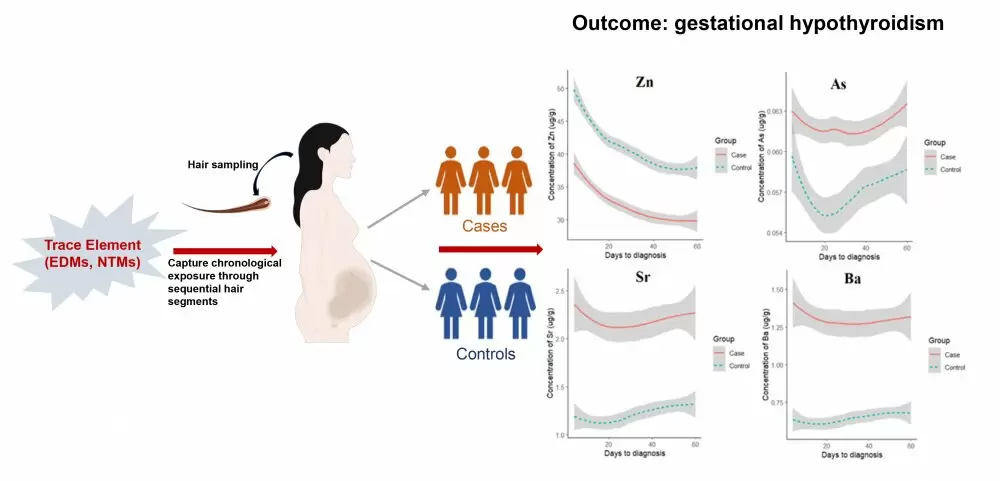
“Environmental exposure to trace elements, including EDMs such as arsenic (As), strontium (Sr), and barium (Ba), as well as NTMs like zinc (Zn), plays a significant role in thyroid hormone homeostasis,” explains Professor Leung. “To assess trace elements, short-term matrices such as urine and blood are commonly used. However, these results may not accurately reveal historical exposure, limiting the evaluation of long-term health effects. In contrast, using maternal hair as a noninvasive biomarker allows for the reconstruction of past exposures during critical periods of disease development, facilitating a cumulative, time-resolved assessment of exposure.
_1769672847.png)
"We are striving to make chemistry speak to real-world needs," Professor Leung suggests regarding the implications of the work. "By decoding the chemical history locked in hair, we can potentially alert mothers to thyroid risks long before clinical symptoms manifest, allowing for earlier, dietary interventions," said Professor Leung.
The study is the first to examine the relationship between trace element exposure and gestational hypothyroidism, highlighting several notable strengths, including its analysis of both EDMs and NTMs, which mirrors the complex realities of pregnant women’s exposures. The breakthrough of using of hair as a biomonitoring matrix allowed a cumulative assessment over time, providing a breadth of data not typically gleaned from short-term sampling methods.
Click here for more details of the research findings.