


How ‘forever chemicals’ impact the placenta: HKBU research uncovers hidden cellular damage
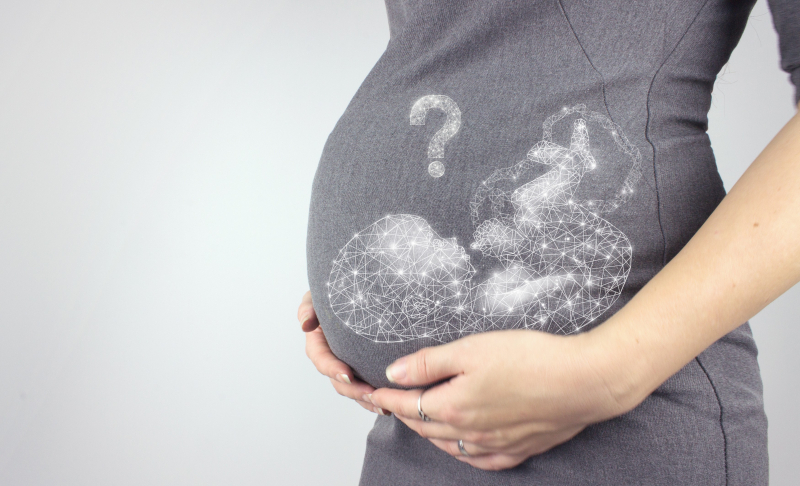
During pregnancy, the placenta performs an extraordinary balancing act. For several months, this temporary organ becomes a lifeline between the mother and developing foetus, delivering oxygen and nutrients while carrying away waste. Much depends on an intricate network of blood vessels taking shape at just the right time, making the placenta remarkably efficient, but also sensitive to disruption.
Led by Professor Chris Wong, Chair Professor in Environmental Science at the Department of Biology, the study found that exposure to perfluorooctane sulfonate (PFOS) can alter lipid metabolism in the placenta, increase oxidative stress, and impair the formation of placental blood vessels in a mouse model. Together, the findings offer a closer look at how PFOS may begin to affect the placenta from within.
PFOS belongs to the family of per- and polyfluoroalkyl substances, or PFAS, commonly known as “forever chemicals”. Once valued for their ability to resist heat, grease, and water, PFAS were widely used in products ranging from non-stick cookware and waterproof fabrics to food packaging and firefighting foams. Their durability, however, has proved to be something of a double-edged sword: they break down very slowly and continue to persist in water, soil, and food supplies.
PFOS presence has raised particular concern during pregnancy. Previous studies have linked PFAS exposure with gestational hypertension, pre-eclampsia, and impaired foetal growth. Earlier research by the HKBU team also showed that PFOS exposure could reduce the transfer of glucose and amino acid analogues from mother to foetus.
Existing studies had already raised the alarm. What remained unclear was what PFOS actually does inside the placenta. To investigate, the team exposed pregnant mice to two doses of PFOS and examined changes in the mothers’ blood and placental tissue.
The results pointed to a chain reaction. PFOS altered the balance of important fats in both the blood and placenta. These fats do far more than store energy: they help form cell membranes, carry signals, and support the cells involved in building blood vessels.
As that balance shifted, the placenta also began to show signs of cellular stress and damage. The researchers found evidence that its antioxidant defences had been activated, but not enough to fully protect the tissue. Taken together, the findings suggest that PFOS may create a less favourable environment for the cells responsible for forming the placenta’s blood vessels.
“The placenta plays a critical role in supporting foetal development, yet we are still uncovering how persistent environmental contaminants can interfere with its function,” explains Professor Wong. “By tracing these changes from lipid metabolism and oxidative stress through to blood vessel development, we can begin to understand not only that PFOS may affect the placenta, but how those effects may unfold.”
The clearest evidence appeared in the placenta’s vascular network. Imaging showed that PFOS accumulated particularly strongly in the labyrinth zone, a vessel-rich region where much of the exchange between mother and foetus takes place. In mice exposed to the higher dose, signs of blood vessel formation were significantly reduced. Levels of VEGF, a protein that helps signal the growth of new blood vessels, also fell.
Yet from the outside, there was little to give the game away. At this stage of pregnancy, the researchers found no major differences in maternal weight gain or in the ratio of placental to foetal weight. The changes occurred on a much smaller scale, inside cells, molecules and developing blood vessels.
By connecting these changes, the HKBU study begins to bridge an important gap between environmental exposure and pregnancy outcomes. Rather than simply showing that PFOS is associated with problems, it offers a possible biological route by which the chemical may compromise placental function.
For an organ that exists for only a brief chapter of our lives, the placenta performs an astonishing amount of work. Understanding how persistent pollutants can disturb that delicate sequence brings researchers one step closer to revealing the hidden biological effects of chemicals that have earned the name forever for good reason.
Full paper on Journal of Hazardous Materials: https://doi.org/10.1016/j.jhazmat.2025.140636
Other research by Professor Wong on the impact of PFAS exposure during pregnancy:
Effects of In Utero Exposure to Perfluorooctane Sulfonate on Placental Functions. Environ. Sci. Technol. 15 December 2020; 54 (24): 16050–16061. https://doi.org/10.1021/acs.est.0c06569
Effects of In Utero PFOS Exposure on Epigenetics and Metabolism in Mouse Fetal Livers. Environ. Sci. Technol. 10 October 2023; 57 (40): 14892–14903. https://doi.org/10.1021/acs.est.3c05207
Impact of PFOS Exposure on Murine Fetal Hematopoietic Stem Cells, Associated with Intrauterine Metabolic Perturbation. Environ. Sci. Technol. 25 March 2025; 59 (11): 5496–5509. https://doi.org/10.1021/acs.est.5c02623
Professor Wong’s research profile: https://scholars.hkbu.edu.hk/en/persons/CKCWONG/

Professor Chris Wong
Faculty of Science and Technology