

Research protects the endangered wild Saussurea involucrata (snow lotus)
.png)
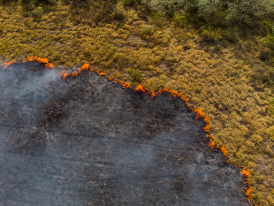
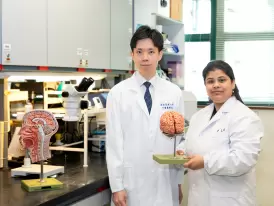
In response to the endangerment of wild Saussurea involucrata (snow lotus) due to overharvesting, a research team led by Dr Chen Qilei (Teaching and Research Division, School of Chinese Medicine) is collaborating with an industry partner on a new research initiative.
The project utilises plant stem cell culture technology to produce exosome-like nanoparticles (ELNs), an innovative approach enabling the sustainable, large-scale production of the plant’s bioactive compounds.
Titled “Quality evaluation and product development of Saussurea involucrata exosome-like nanoparticles as functional foods”, the project has been recognised by the Innovation and Technology Support Programme (Collaborative) and supported by the industry partner, securing a total funding of HK$ 800,000.

Dr Chen and teammates including Professor Chen Hubiao will focus on optimising the extraction methods for Saussurea involucrata-derived ELNs, analysing their physicochemical properties, and establishing rigorous quality control standards. The team will also validate the nanoparticles’ immune-enhancing functions and elucidate their underlying active mechanisms.
By aligning with the Innovation and Technology Commission’s (ITC)’s emphasis on collaborative applied R&D projects undertaken by local public research institutes, the team’s research is set to foster university–industry translation and advance the development of Hong Kong’s biotechnology industry.