

A first for "One University, Two Campuses": HKBU and BNBU co-organise 3rd International Symposium on Humanities and Culture
 -1.jpg)
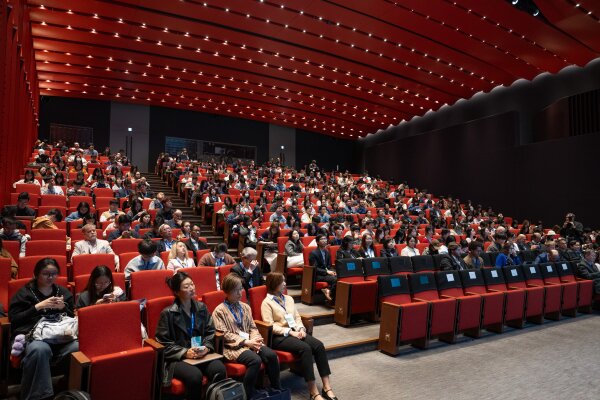
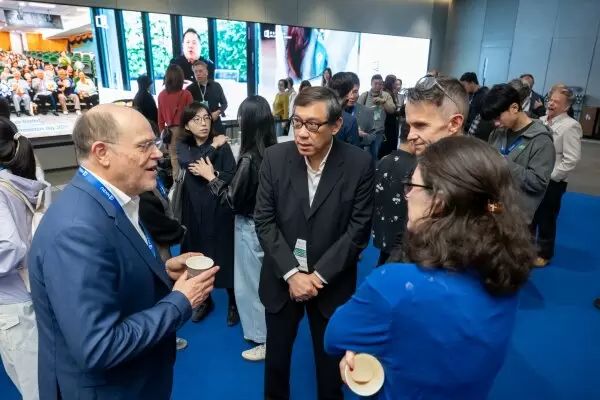
In a first for the "One University, Two Campuses" vision, Hong Kong Baptist University (HKBU) and Beijing Normal University–Hong Kong Baptist University (BNBU) jointly staged the 3rd International Symposium on Humanities and Culture: Strategies and Impact of a Digital Future across two cities — at the Hong Kong Palace Museum on 18 March and on BNBU's Zhuhai campus on 20 March. Supported by HKBU's Institute of Creativity (IoC) and the Hung Hin Shiu Charitable Foundation, the two-day event drew over 1,000 in-person attendees and 2.6 million online views, convening leading scholars from McGill University, Monash University, Princeton University, RMIT University, and the University of Oxford to explore how digital technologies are reshaping culture, education, and society — and what it means to keep humanity at the centre.
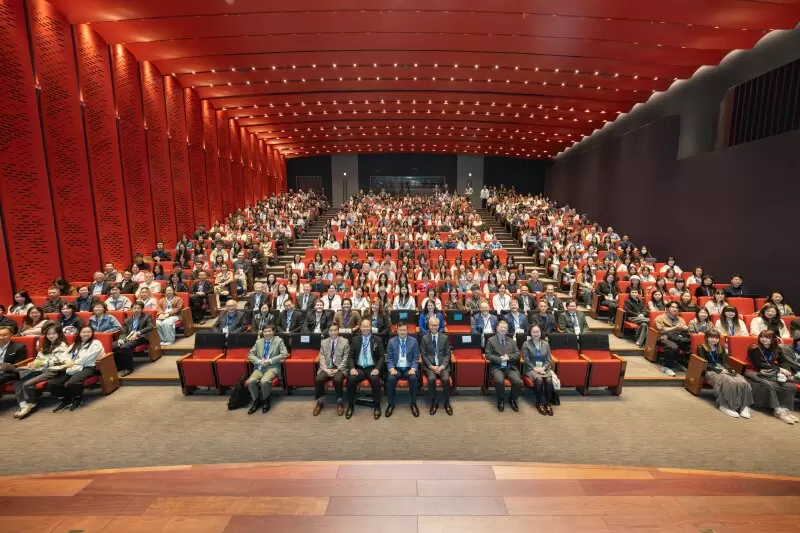
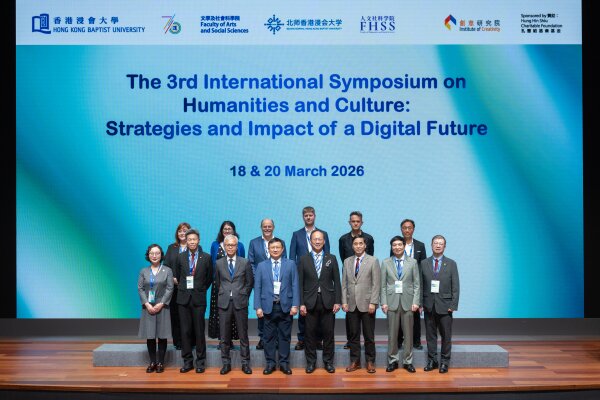
Group photo at the Hong Kong Palace Museum on 18 March.
.jpg)
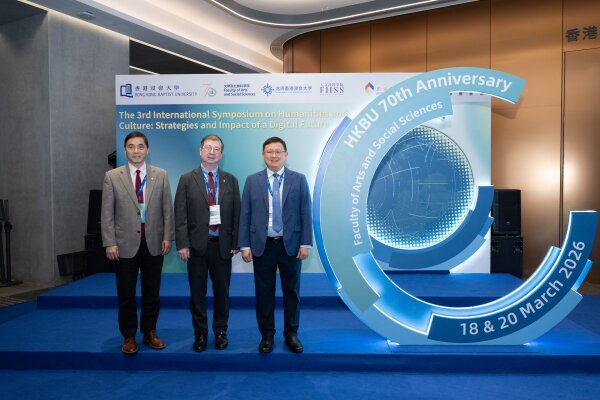
Group photo at BNBU on 20 March.

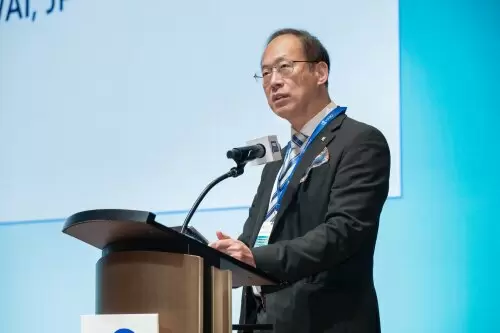
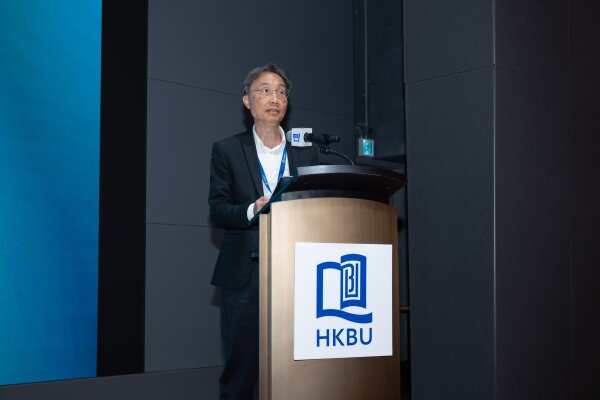
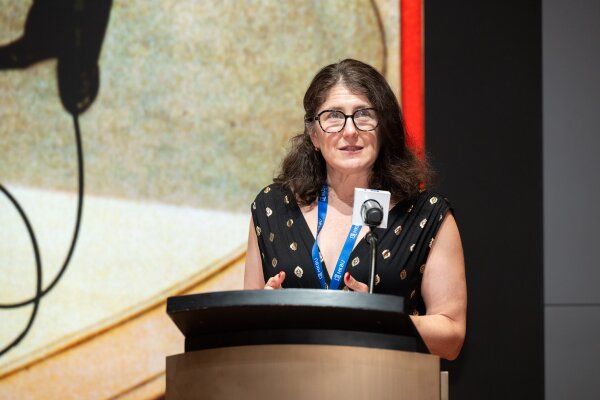
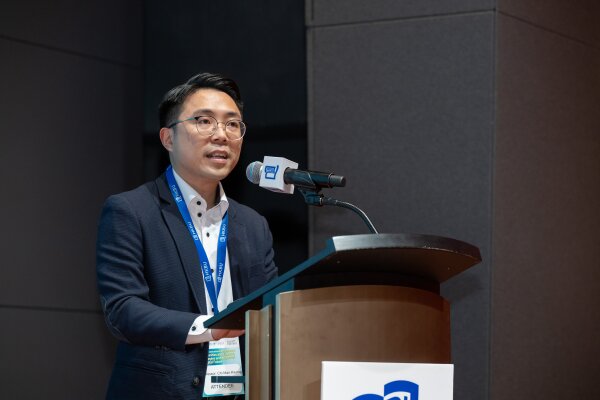
The first day of the symposium opened with a welcome address by Dr Kennedy Y. H. Wong, Chairman of the Council and Court of HKBU (left). Dr Wong highlighted the opportunities that virtual and augmented reality, big data, and generative AI present for cultural expression, heritage preservation, and scholarly inquiry. This was followed by Professor Alex Wai, President and Vice‑Chancellor of HKBU’s (right) opening remarks, which underscored the university’s leading role in transdisciplinary education and research, encouraging a holistic understanding of technology’s influence on society and culture.
.JPG)
.JPG)
The second day was held at BNBU, and themed “Social, Ethical, and Policy Implications of Technology”. Professor Patrick Chau, Provost of BNBU (left), delivered a welcoming address, emphasising the shared HKBU–BNBU vision that higher education must connect technological advancement with humanistic insight. Professor Chau noted that as we move toward a digital future, what we are ultimately pursuing is a human future - one grounded in empathy, reflection, and creativity. Building on this, Professor Daniel Lai, Dean of the Faculty of Arts and Social Sciences at HKBU (right), reiterated the symposium’s aims: breaking down disciplinary silos, bridging Chinese and global perspectives, and upholding human values in the AI era.
The opening set a constructive tone for the day’s programme, which featured an intriguing panel discussion led by Professor Tang Beibei, Dean of the Faculty of Humanities and Social Sciences at BNBU, and a series of insightful presentations from the BNBU faculty.
.jpg)
Professor Tang (above) led a discussion on the social, ethical, and policy implications of technology, and provided China‑focused insights from her research and observations.
.JPG)
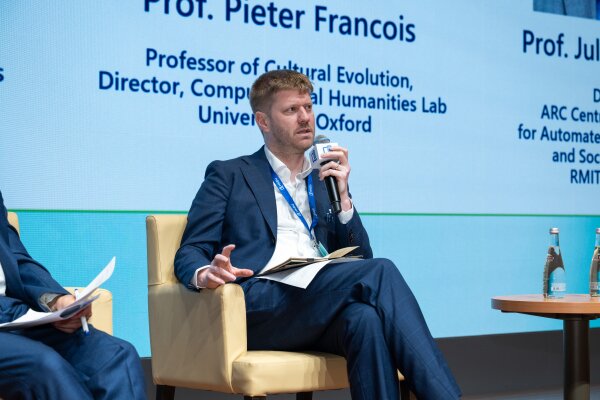
From left: Professor Julian Thomas, Director of the ARC Centre of Excellence for Automated Decision-Making and Society at RMIT University; Professor Pieter Francois, Professor of Cultural Evolution and Director of Computational Humanities Lab at the University of Oxford; Professor Meradith Martin, Founding Director of the Centre for Digital Humanities at Princeton University; Professor Cecily Raynor, Associate Professor and Chair of the Department of Languages, Literatures and Cultures at McGill University; Professor Neil Selwyn, Professor of the Faculty of Education at Monash University, and Professor Tang.
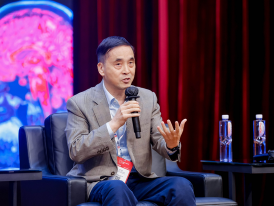
Joining the panel were scholars from around the world, who gave region‑specific examples and research findings from their own specialities. Issues they probed included the social and environmental sustainability of digital technologies, the relationship between technology and the humanities, the relationship between technology and social inequality, and questions of agency and accountability. These threads returned to a central premise: a digital future is, in essence, a human future.
Three BNBU professors made presentations on “Digital Technology and Higher Education”, each from the perspective of a different educational field.
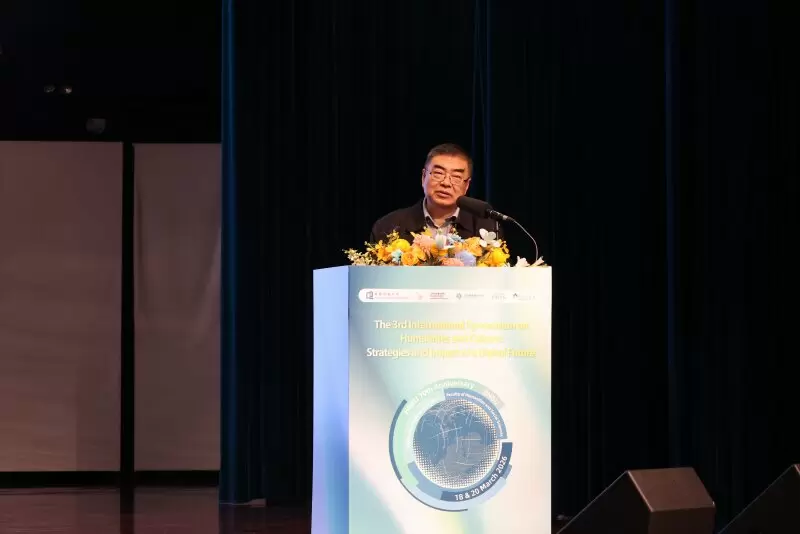
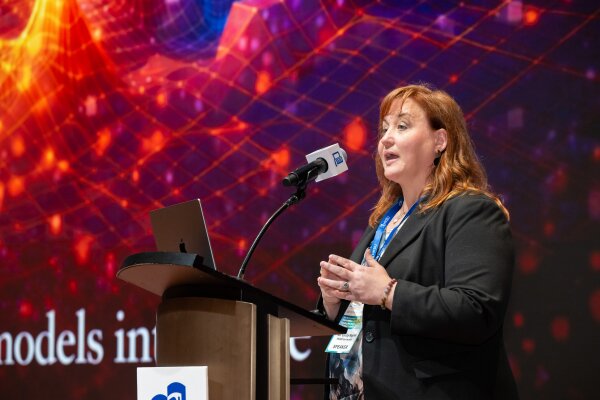
Professor Chen Zhong, Dean of the School of AI and Liberal Arts (SAI) (above), presented on the title “Reimagining the University in the Age of AI: Insights from SAI”, outlining curriculum design, faculty strategy, core educational pillars, and other programmatic initiatives.
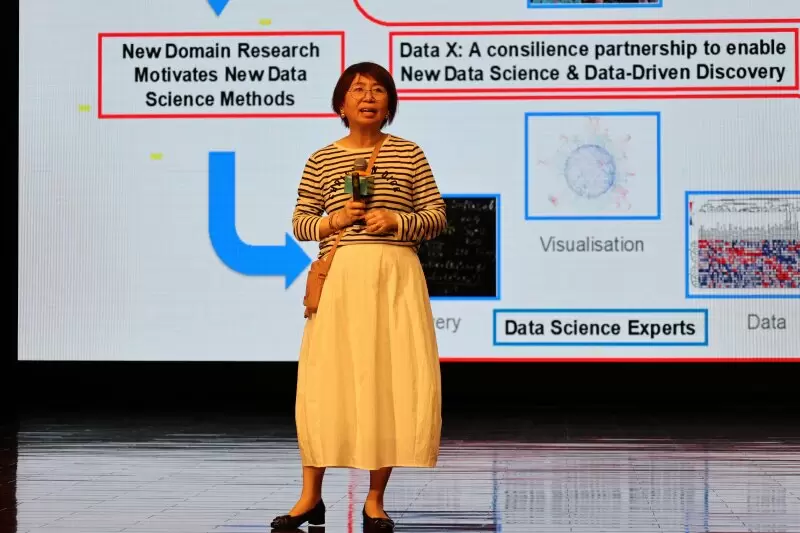
Professor Yang Jian, Acting Dean of the Faculty of Science and Technology and Associate Dean of SAI (above), spoke of the strengths of the Faculty of Science and Technology, and particularly BNBU’s high level research platforms, which include the new Guangdong Provincial Key Laboratory of Interdisciplinary Research and Application for Data Science, and the Key Laboratory for Artificial Intelligence and Multi-Modal Data Processing of the Department Education of Guangdong Province.
.jpg)
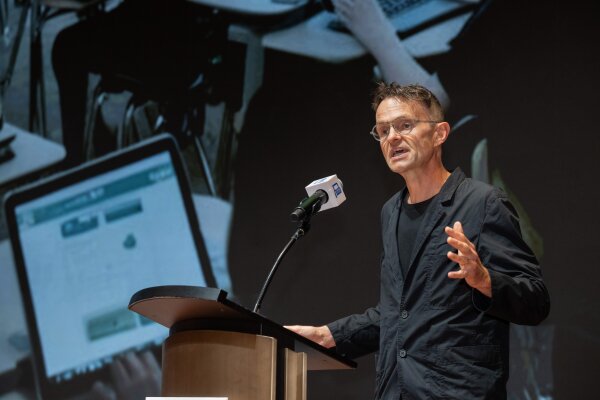
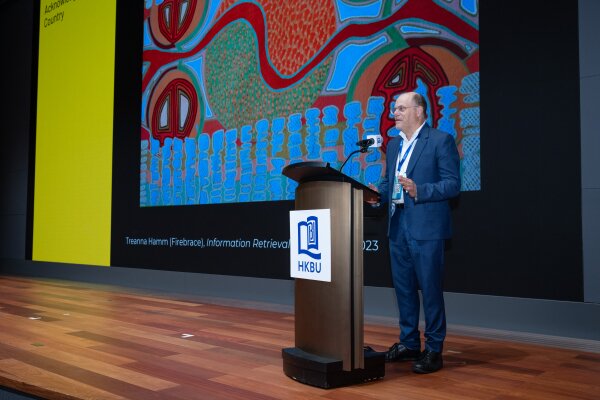
Professor Indika Liyanage, Associate Dean of the Faculty of Humanities and Social Sciences (above), spoke on “The Unsilicon Valley: Why Poetry, Philosophy and History are the Blueprints for Our Digital Future”, stressing that the future depends on both technology and the humanities - and that whatever bridges the two will be pivotal.
Overarching Takeaway
The symposium's defining narrative is that the digital future must remain a human future. Every major address — from Dr Wong's vision of AI-enabled cultural preservation to Professor Chau's call for empathy and creativity, to Professor Liyanage's argument that poetry and philosophy are "blueprints for our digital future" — reinforced the same idea: technology without humanistic grounding is incomplete. By staging this conversation for the first time across two campuses with IoC's support, HKBU signalled that this interdisciplinary, cross-border model of scholarship is central to its identity going forward.