跳到主要內容
news

From Nobel-winning autophagy science to Chinese medicine: HKBU explores new frontiers in treating brain diseases

返回

From Nobel-winning autophagy science to Chinese medicine: HKBU explores new frontiers in treating brain diseases


How can the cell’s natural “self-cleaning” system be harnessed to combat Alzheimer’s, Parkinson’s, and other neurodegenerative diseases?


Nobel Prize-linked autophagy pioneer Professor Noboru Mizushima, Professor and Vice Dean, Department of Biochemistry and Molecular Biology, Graduate School and Faculty of Medicine, The University of Tokyo, and Professor Li Min, Chair Professor and Dean, School of Chinese Medicine, Hong Kong Baptist University (HKBU), explored this question at the inaugural “CxC” Series event, held at HKBU on 11 August 2026.


The event, titled “The Cell That Cleans Itself: From a Novel Discovery to New Hope for Brain Diseases,” brought together research on autophagy—the cellular process recognised by the 2016 Nobel Prize in Physiology or Medicine—and HKBU’s efforts to identify neuroprotective drug candidates derived from traditional Chinese medicine.

From Nobel-winning autophagy science to Chinese medicine: HKBU explores new frontiers in treating brain diseases

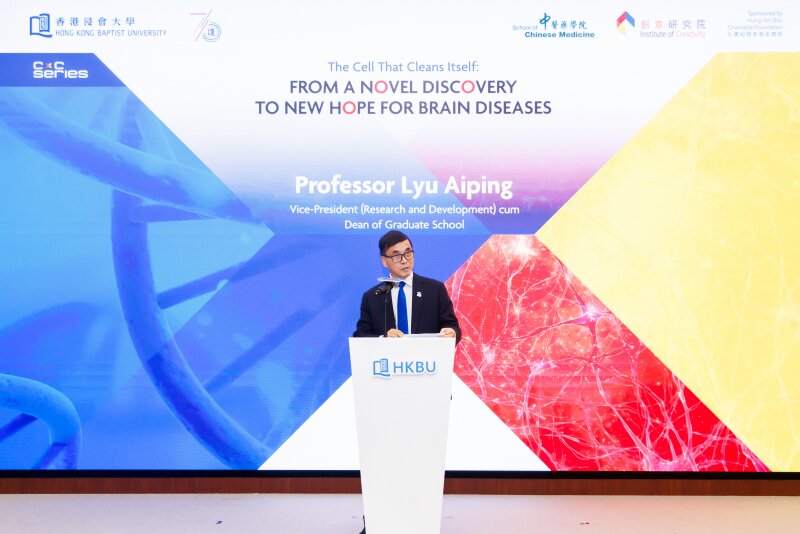
Professor Lyu Aiping, Vice-President (Research and Development) and Dean of Graduate School at HKBU, delivers the opening remarks, unveiling the concept behind “CxC”, which stands for “Chair Professor + Chair Professor”


“Neurological dysfunction and abnormal morphology caused by autophagy defects can be reversed by autophagy restoration,” said Professor Mizushima, who was among the first scientists to visualise autophagy in mammalian tissues. 


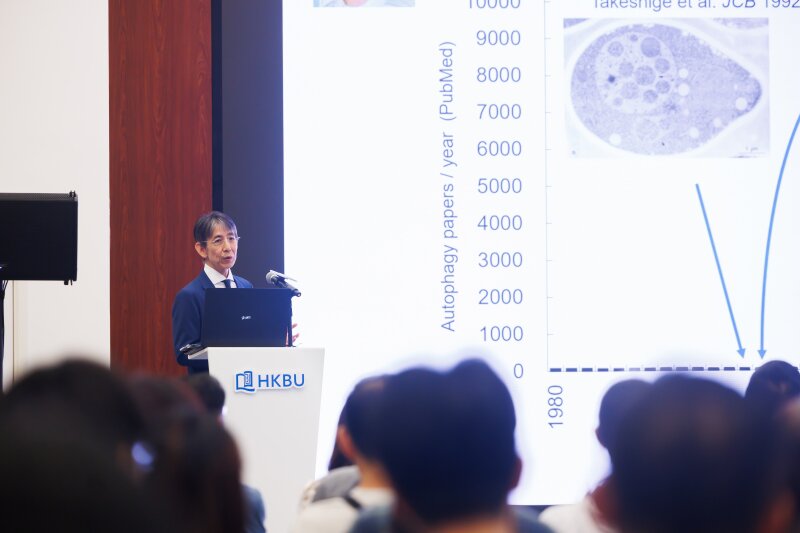
Professor Mizushima then traced the historical evolution of autophagy research. As a mentee of Professor Yoshinori Ohsumi, the 2016 Nobel Prize laureate in Physiology or Medicine, he first visualised autophagy in mammalian tissues—an achievement that established his standing in the field. His presentation outlined the fundamental molecular mechanisms and physiological roles of autophagy, offering an overview of a scientific domain that has transitioned from obscure observations into global medical significance over recent decades.
 

From Nobel-winning autophagy science to Chinese medicine: HKBU explores new frontiers in treating brain diseases

Professor Mizushima started his research on autophagy when he joined Dr Ohsumi’s lab in 1997. He recalls that at that time, only a few papers had been published in the field, whereas now more than 100 to 200 are published every week


The professor discussed recent findings on autophagosome-lysosome fusion and reversible autophagy-related (ATG) knockdown mouse models that demonstrate restored motor and memory functions, and also his research on organelle degradation, which remains a highly active area of contemporary inquiry.


From Nobel-winning autophagy science to Chinese medicine: HKBU explores new frontiers in treating brain diseases

For over 40 years of clinical practice, teaching, and research experience, Professor Li has been a leading figure in advancing the understanding and clinical treatments of neurodegenerative diseases through both traditional Chinese medicine (TCM) and biomedical approaches. Since the late 2000s, she has explored the link between TCM and autophagy regulation in neurodegenerative diseases


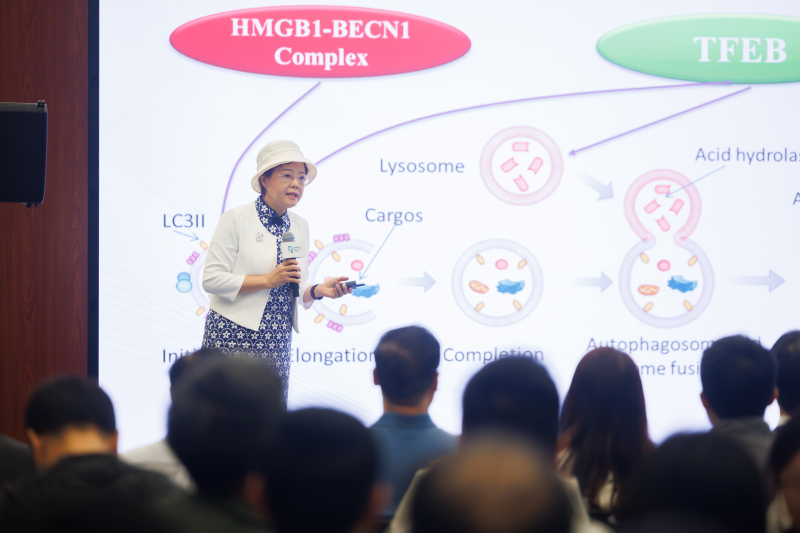
Professor Li’s presentation, titled "The Cell that Cleans Itself: Novel Drug Discovery from TCM for Brain Diseases", began by addressing the rising prevalence of Alzheimer's and Parkinson's diseases globally. She noted that current pharmaceuticals do not offer a cure, and certain treatments may introduce safety concerns such as amyloid-related imaging abnormalities (ARIA), driving the search for novel therapeutic targets.


Named the First Cohort of National Outstanding Female Chinese Medicine Practitioner in 2007, Professor Li explained her team’s discoveries on the autophagy-regulating mechanisms of neuroprotective agents derived from Chinese medicine Uncaria rhynchophylla (Gouteng in Chinese) and curcumin derivatives over the years, showing how TCM wisdom is integrated with cutting-edge molecular science.


“Clinically, Gouteng is frequently utilised in traditional formulas to treat tremors and clear heat,” noted Professor Li, who is consistently ranked among the world’s top 2% most-cited scientists by Stanford University.


“In clinical Chinese medicine, we typically prescribe a multi-herb formula rather than a single compound. By utilising traditional wisdom and clinical experience, we can optimise therapeutic outcomes by combining different active compounds,” she added. 


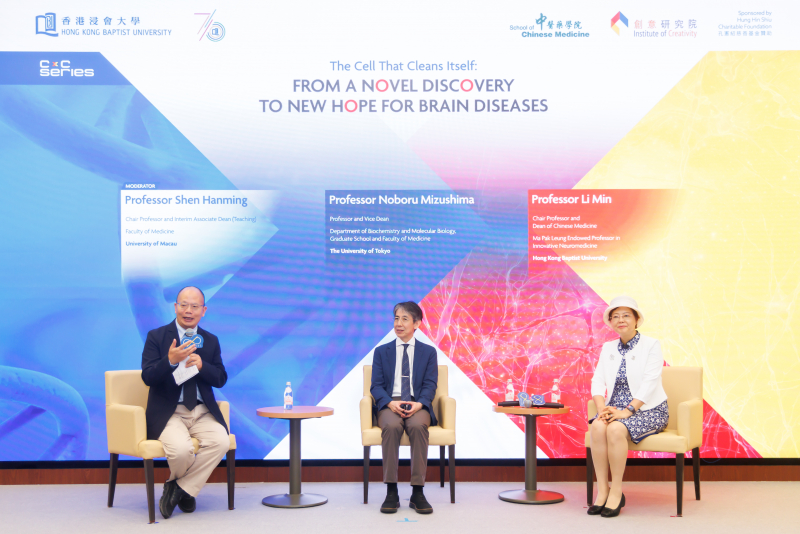
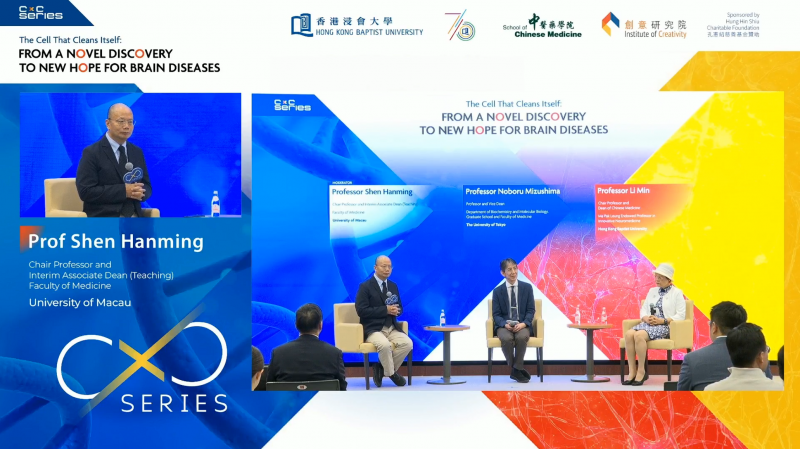
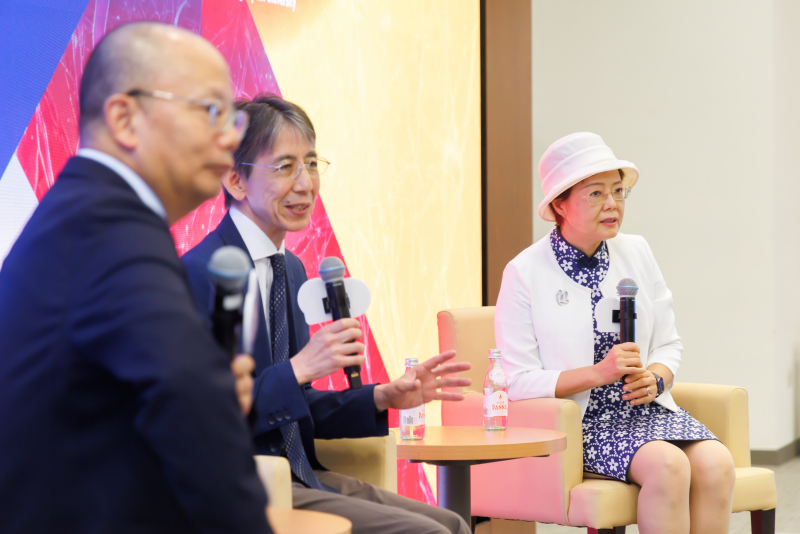
The event concluded with a panel dialogue moderated by Professor Shen Hanming (Chair Professor and Interim Associate Dean (Teaching), Faculty of Medicine, University of Macau), where the speakers discussed how autophagy could be successfully harnessed to treat neurodegenerative disorders. 


Professor Shen, who specialises in autophagy and cancer biology, pointed out that autophagy acts as a double-edged sword in oncological contexts. While generally protective in neurodegenerative disorders, its role in cancer is stage-dependent—suppressing tumour development in early stages but actively supporting the survival of cancer cells in advanced stages.
 

From Nobel-winning autophagy science to Chinese medicine: HKBU explores new frontiers in treating brain diseases

The event was also broadcast online for regional and overseas participants


“Although we have identified multiple active compounds that enhance autophagy, translating them into clinically viable drug candidates remains our primary challenge,” Professor Li added. “Because the pathology of neurodegeneration is multi-factorial, a single compound is unlikely to provide a complete cure.”


From Nobel-winning autophagy science to Chinese medicine: HKBU explores new frontiers in treating brain diseases

Professor Mizushima explains the complex relationship between autophagy and cancer, noting that in experiments where autophagy is blocked, tumours develop in mice, whereas some established cancers actually rely on autophagy to survive


Inaugurated by the Institute of Creativity (IoC) and supported by the Hung Hin Shiu Charitable Foundation Limited, the "CxC" Series features duo-led dialogues between world-class scholars to stimulate scientific inspiration, drive academic exchange, and foster collaborative research. 


From Nobel-winning autophagy science to Chinese medicine: HKBU explores new frontiers in treating brain diseases

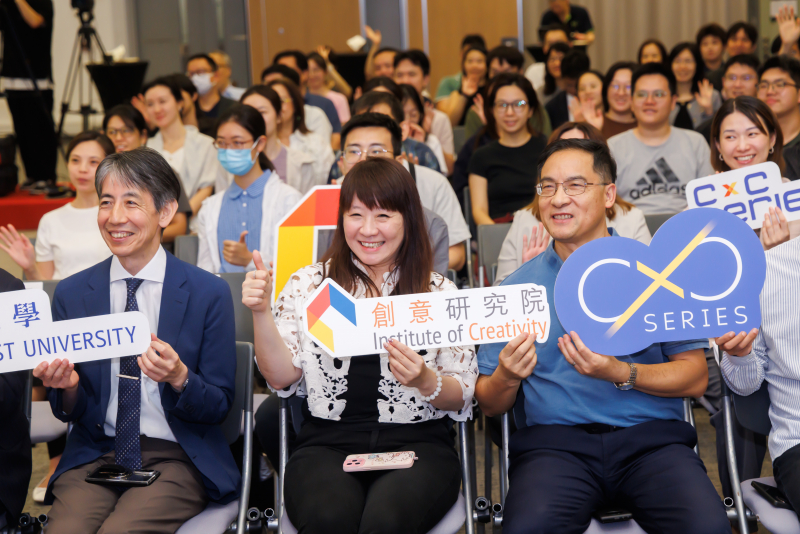
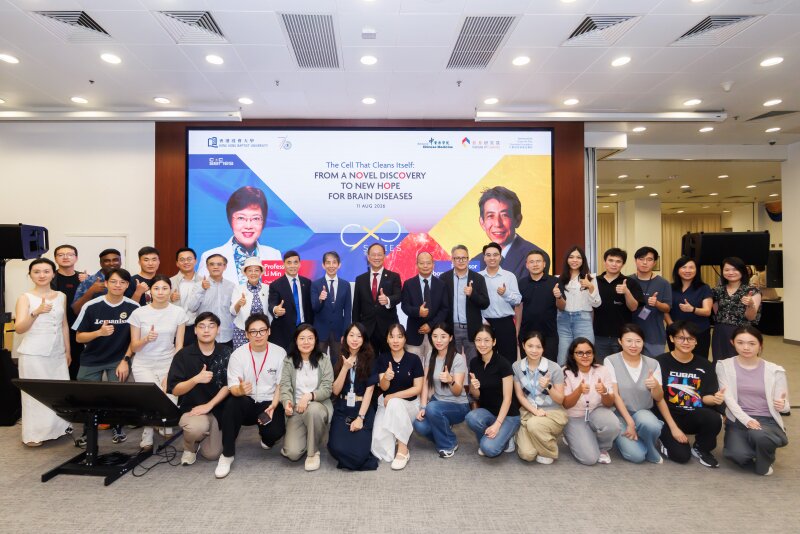
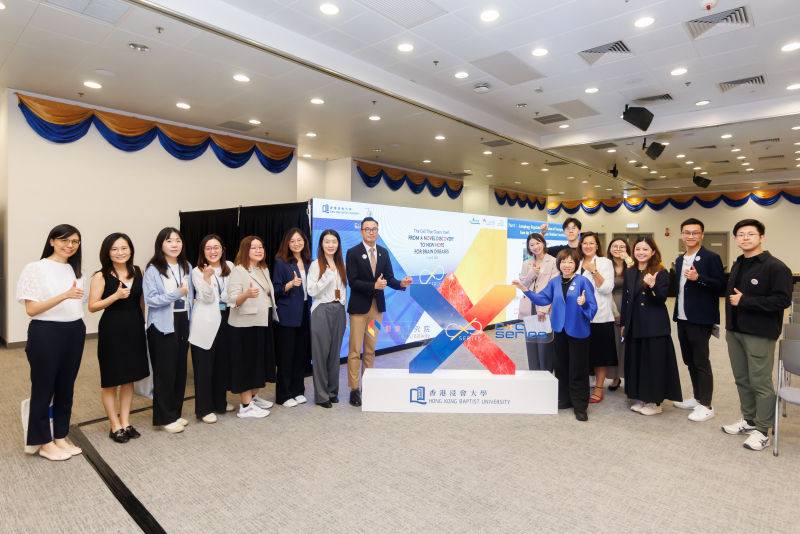
Over 120 scientists, guests, researchers and students from HKBU and other universities, including Imperial College London, The Hong Kong Polytechnic University, and Chengdu University of Traditional Chinese Medicine participate in the event


From Nobel-winning autophagy science to Chinese medicine: HKBU explores new frontiers in treating brain diseases

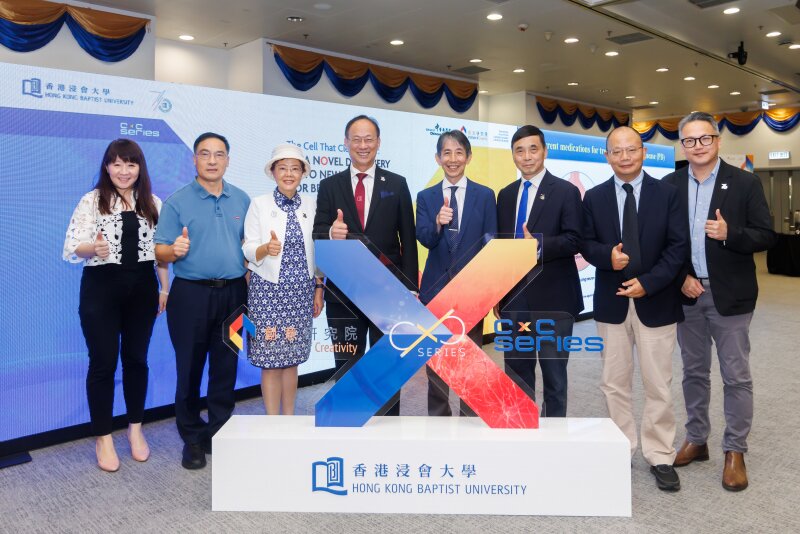
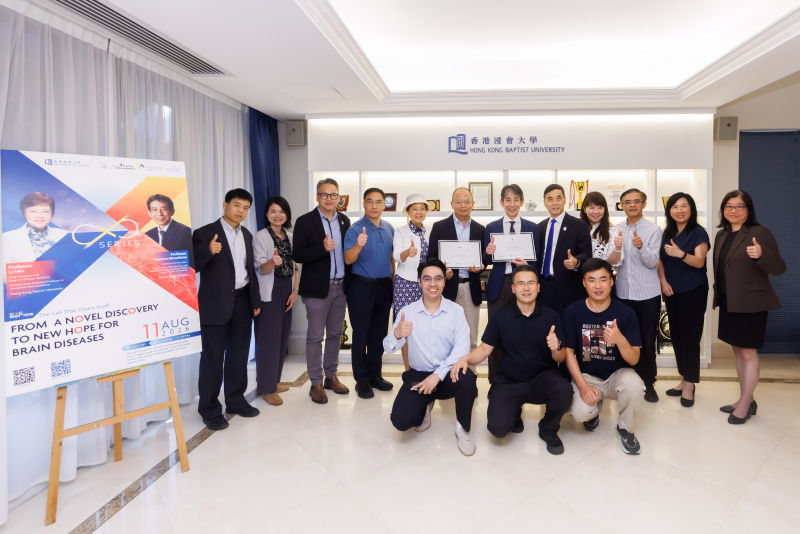
From left: Professor Christy Cheung, Chair Professor in Information Systems and Digital Innovation Management and Director of Research Office, HKBU; Professor Ma Daqing, Imperial College London; Professor Li; Professor Alex Wai, President and Vice-Chancellor, HKBU; Professor Mizushima; Professor Lyu; Professor Shen, and Professor Cheung King-ho, School of Chinese Medicine, HKBU


From Nobel-winning autophagy science to Chinese medicine: HKBU explores new frontiers in treating brain diseases

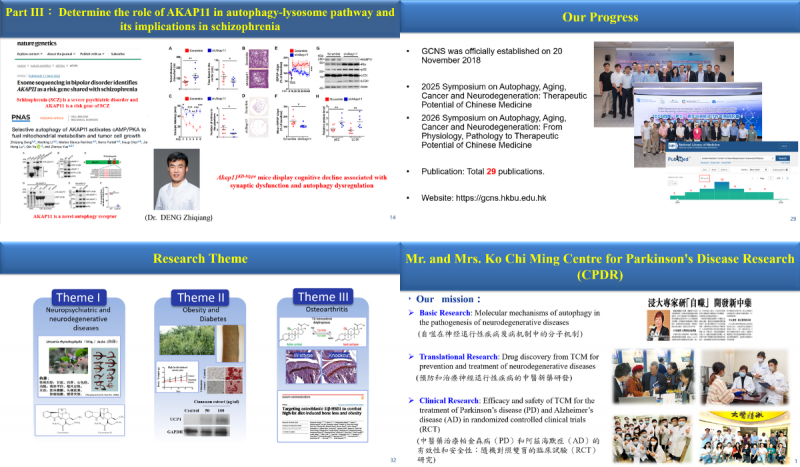
The event is supported by the three research centres: the HKBU Musketeers Foundation Traditional Chinese Medicine Research Institute for Age-related Diseases (MFRI), the Mr. and Mrs. Ko Chi Ming Centre for Parkinson’s Disease Research (CPDR), and the Golden Meditech Centre for NeuroRegeneration Sciences (GCNS)


From Nobel-winning autophagy science to Chinese medicine: HKBU explores new frontiers in treating brain diseases

The three specialised facilities, MFRI, CPDR and GCNS, lead HKBU's research initiatives in translational Chinese medicine and neurodegenerative disorders


From Nobel-winning autophagy science to Chinese medicine: HKBU explores new frontiers in treating brain diseases

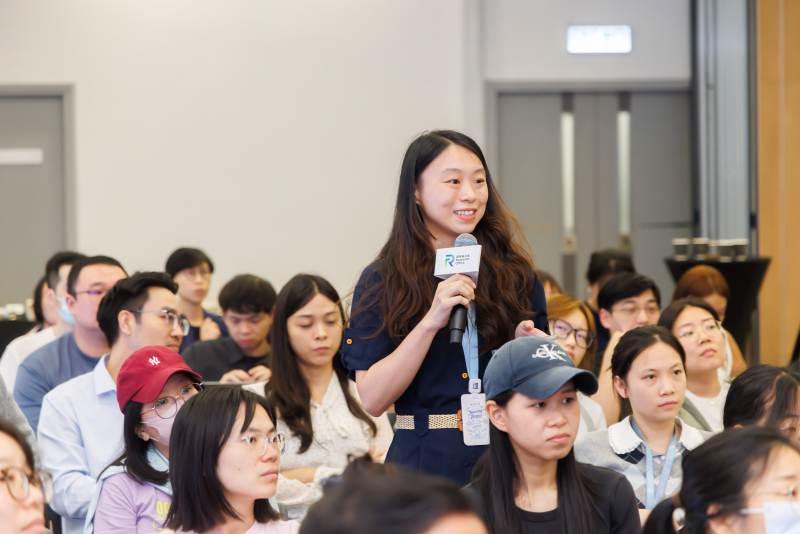
PhD students seize the opportunity to learn from world-class scholars


From Nobel-winning autophagy science to Chinese medicine: HKBU explores new frontiers in treating brain diseases

As well as the event, a special exchange session was held to encourage dialogue among researchers in HKBU and other universities


From Nobel-winning autophagy science to Chinese medicine: HKBU explores new frontiers in treating brain diseases

The event organising team from the Research Office and the School of Chinese Medicine