


From Olympians to astronauts: How HKBU is helping sport adapt to a warming world
As rising temperatures increasingly challenge the safe delivery of major sporting events, international sports leaders have begun questioning how sport can adapt to a warming world. Against this backdrop, researchers at Hong Kong Baptist University (HKBU) are helping develop evidence-based solutions that are already influencing global policy and athlete safety.
Key Impacts:
- HK$7.9 million grant secured from Hong Kong's Culture, Sports and Tourism Bureau
- 60+ elite athletes, coaches, and sports scientists in Hong Kong using the heat-monitoring system
- 25,000 sports personnel received the IOC's heat safety guide developed with HKBU's research
- 1st Hong Kong sports science innovation to directly influence Olympic safety policies
- International adoption by the IOC for Paris 2024, the European Space Agency, and future Olympic Games
A multidisciplinary team led by Professor Yannis Pitsiladis of the Department of Biology and Professor Carl James, Assistant Professor of the Academy of Wellness and Human Development, has developed a pioneering smartwatch-based monitoring system that measures physiological strain in real time. The technology is already influencing international policy, supporting athlete safety at the Olympic Games, assisting military operations, and opening new possibilities for monitoring human performance in future space missions.
What began as an effort to better understand exertional heat illness has evolved into a globally recognised platform for protecting health and performance under extreme environmental conditions.
Moving Beyond the Thermometer
Exertional heat illness remains one of the most serious threats to athlete safety. It is the third leading cause of death during exercise and can leave survivors with lifelong neurological and cardiovascular complications. Despite these risks, decisions about athlete safety have historically relied on environmental measurements such as wet-bulb globe temperature (WBGT), rather than understanding how individual athletes respond physiologically to heat.
One of the major limitations of existing approaches is that they focus on the environment rather than the individual
Professor Yannis Pitsiladis
"Our research has shown that exercise intensity is often a more important determinant of heat strain than environmental heat alone. Two athletes competing under identical conditions may experience very different physiological responses and very different levels of risk," said Professor Pitsiladis.
This insight challenged long-standing assumptions about how heat-related risks should be assessed and managed.
Perhaps the most important finding from the research was that dangerous physiological strain can occur even when environmental conditions appear relatively safe. For decades, sporting organisations have relied heavily on environmental heat indices to assess risk. HKBU's research demonstrated that physiological responses vary dramatically between individuals and that exercise intensity is often a stronger determinant of heat strain than environmental heat alone. This represents an important shift in how athlete safety is understood and managed.
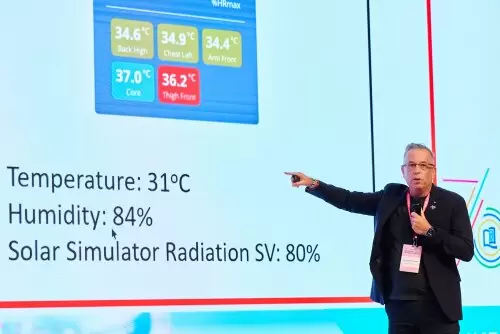
To address the problem, HKBU researchers brought together experts in physiology, biomechanics, microelectronics, data science, and sports medicine to develop a lightweight, regulation-compliant monitoring platform capable of continuously assessing thermoregulatory, cardiovascular, and biomechanical responses during real-world competition.
The system incorporates a novel “traffic light” risk algorithm that provides organisers, coaches, and medical teams with immediate information about an individual's physiological status, allowing earlier intervention when necessary.
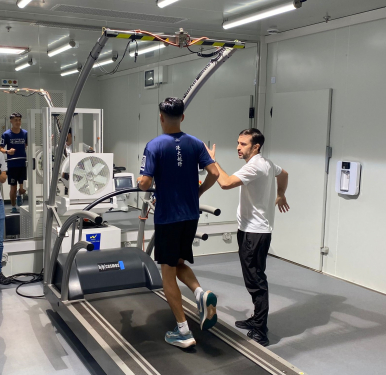
"This innovation made athlete-level monitoring feasible during major competitions and laid the foundation for adoption by international sporting organisations," said Professor James.
Protecting Olympians
The significance of the technology became evident at the Paris 2024 Olympic Games. Recognising the growing threat posed by extreme heat, the International Olympic Committee (IOC) collaborated with HKBU researchers to deploy the system as part of its athlete safety strategy. The technology was used to support heat-risk management for the athletes competing in outdoor Olympic sports.

In a landmark achievement, data generated through the HKBU platform informed athlete protection measures during the Games and contributed to ongoing planning for the 2026 Youth Olympics in Dakar, Senegal and Los Angeles 2028 Olympic Games.
The Paris project represented one of the largest real-world implementations of physiological heat monitoring undertaken during an Olympic Games and demonstrated the feasibility of integrating athlete-level data into safety planning at the highest level of sport.
The team also contributed to the IOC’s “Beat the Heat” educational guide, which was distributed to approximately 25,000 athletes, coaches, and support personnel attending the Games.
Changing Global Policy
Beyond data collection, HKBU's research is reshaping how international sport governs athlete safety.
During the World Triathlon Championship Series, researchers demonstrated that athletes competing in shorter, high-intensity events frequently reached core temperatures exceeding 41°C, despite environmental conditions previously considered acceptable. These findings challenged existing assumptions regarding risk thresholds and highlighted the limitations of policies developed primarily for longer endurance events.
The evidence contributed directly to revisions of heat-management policies within World Triathlon.
Similarly, World Sailing introduced new heat mitigation and rest-period regulations after pilot implementation of HKBU's monitoring system demonstrated the value of real-time physiological data during competition.
These developments represent an important shift in international sport—from relying primarily on environmental measurements toward evidence-based policies that reflect the physiological realities experienced by athletes.
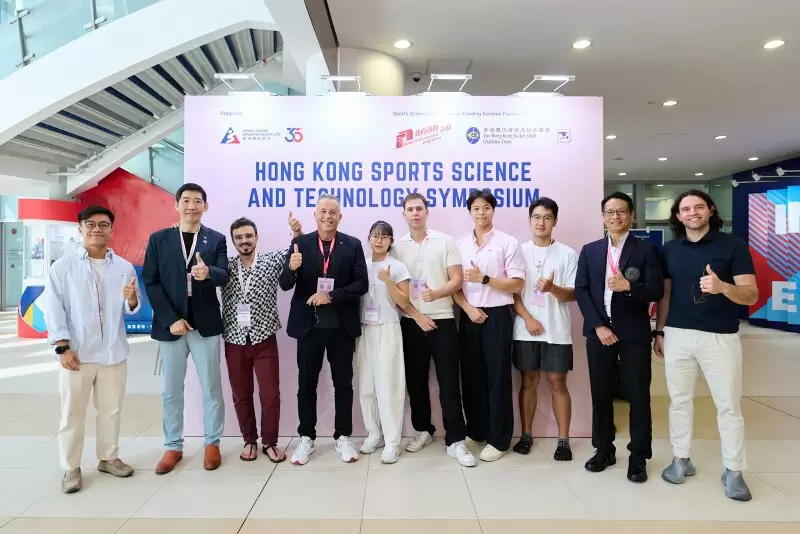
Professor Pitsiladis (4th from left) with the Centre for Exercise Science and Medicine (CESAME) team at the Hong Kong Sports Science and Technology Symposium
Supporting Hong Kong Athletes
The impact of the technology is already being felt closer to home. Supported by a HK$7.9 million grant from Hong Kong's Culture, Sports and Tourism Bureau, the monitoring system is currently being used by more than 60 Hong Kong elite athletes, alongside coaches and sports scientists working within high-performance programmes.
The technology is helping optimise training, inform competition planning, and strengthen athlete safety across multiple sports.
The adoption of HKBU-developed technology by the International Olympic Committee represents one of the most significant examples of a sports science innovation originating in Hong Kong influencing athlete safety policy on a global scale. It demonstrates how locally developed research can contribute directly to international decision-making and athlete welfare.
More importantly, it is creating one of the world's largest databases of physiological responses among elite athletes, generating new knowledge that will continue to shape policy and practice for years to come.
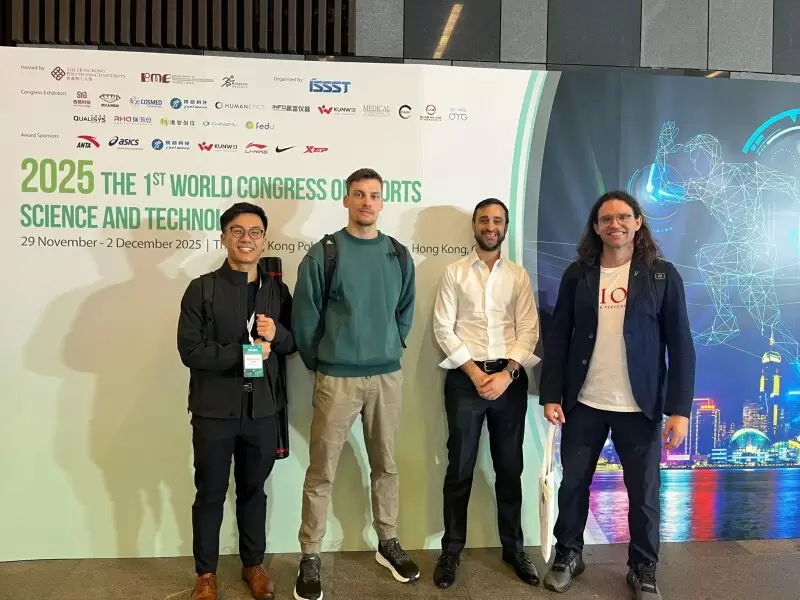
Professor James (2nd from right) presents at the 1st World Congress on Sports Science and Technology at Hong Kong Polytechnic University
From Sport to National Security
The potential applications extend far beyond sport. Recognising the value of real-time physiological monitoring in demanding environments, the Singapore Army invited HKBU researchers to deploy the technology during a tropical half-marathon involving 160 soldiers.
By integrating physiological data with a practical decision-support platform, commanders and medical personnel were able to monitor heat strain in real time and respond rapidly when risks emerged.
Feedback following the deployment highlighted improvements in situational awareness, risk assessment, and decision-making, demonstrating the system's broader relevance to occupational health and human performance.
The Journey to Space
Perhaps the most unexpected application lies beyond Earth. Working with the European Space Agency, HKBU researchers have begun adapting the technology to inform future physiological monitoring systems for astronauts, including astronauts with disabilities. The project emerged from monitoring conducted during the Paralympic Games, where researchers assessed the feasibility of wearable monitoring systems in para-sport environments.
The resulting work has led to the development of specialised sensors designed to integrate with prosthetic devices, opening new possibilities for monitoring physiological responses in future space environments, including among astronauts with disabilities.
For Professor Pitsiladis and Professor James, this progression from Olympic venues to space exploration highlights the broader significance of the research.
"What started as a project focused on athlete safety is now contributing to a much wider understanding of human performance in extreme environments," said Professor James.
"As temperatures continue to rise globally, the ability to understand and respond to physiological strain in real time will become increasingly important—not only for athletes, but for soldiers, workers, patients, and potentially even astronauts."
Looking Ahead
The HKBU team continues to expand the platform's capabilities and applications. Ongoing projects include collaborations with international sporting federations, preparations for the Los Angeles 2028 Olympic Games, and new studies examining how physiological monitoring can support health, safety, and performance in increasingly challenging environmental conditions.
For Professor Pitsiladis, the broader significance extends far beyond sport.
"Whether we are working with Olympians, military personnel, para-athletes, outdoor workers, or future astronauts, the principle is the same: better information leads to better decisions, safer participation, and ultimately better outcomes."
As climate change continues to reshape the environments in which people live, work, train, and compete, the ability to understand physiological strain in real time may become one of the most important tools available for protecting health and performance. From Olympic venues to military operations and future space missions, HKBU research is helping build that future.
Professor Yannis’s research profile: Yannis PITSILADIS - Hong Kong Baptist University
Professor James’s research profile: Carl JAMES - Hong Kong Baptist University
上一則消息

下一則新聞

29.07.2026