

From research to remission: communication interventions are transforming IBD care for nearly 1,000 patients across China and the US
Inflammatory bowel disease (IBD) affects millions worldwide, with cases rising rapidly in China. But HKBU research led by Professor Zhong Bu shows that communication interventions can comfort patients and change the clinical course of the disease. Since 2019, nearly a thousand patients across China and the US have benefitted, and UNESCO has taken notice.
Key Impacts:
- 1,000+ IBD Patients Benefited Directly across clinical partner sites in China and the US, leading to improved compliance, better treatment outcomes, and enhanced self-management.
- 3,000+ Patients & Caregivers Reached by 30 specialist physicians through structured weekly exchanges on social media, reducing caregiver anxiety and easing clinicians' workloads.
- Cross-Cultural Transferability Validated across distinct healthcare systems in both Chinese and American contexts.
- Global Recognition by UNESCO, which integrated the programme into its Information for Development Working Group in 2024 as a featured best practice.
- Featured at International Forums, including the UN Internet Governance Forums, the Conference on Health IT and Analytics (USA), and the Guangzhou International GI Summit.
Inflammatory bowel disease is chronic, incurable, and unforgiving, so that patients face a lifetime of medication, dietary restrictions, and unpredictable flare-ups. Non-adherence is common. Relapses are costly. Between hospital visits, IBD patients often find themselves alone with conflicting information from the internet, anxious caregivers, and their own fears.
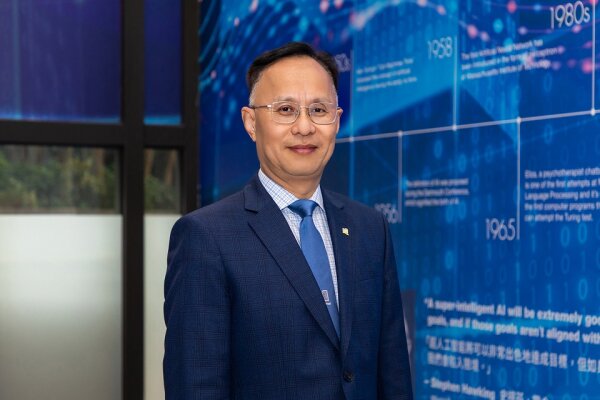
Professor Zhong Bu, Chair Professor and Dean of the School of Communication at HKBU
For years, the medical community focused on drugs and surgery, but Professor Zhong Bu at Hong Kong Baptist University asked a different question: what if communication could change the clinical course of disease?

Between 2019 and 2025, Professor Zhong and his team at HKBU's School of Communication built an evidence base that challenged fundamental assumptions about chronic disease management, and a 2021 study demonstrated that "structured participation in social media groups helped mitigate symptoms and improved outcomes."
"This is direct evidence that digital communication can support medical as well as psychosocial management," says Professor Zhong.
Another strand of research examined how peer interactions shape chronic illness management, identifying "the dynamics of support, comparison, and surveillance that structure online communities."
"These mechanisms can motivate adherence, but also heighten anxiety if unmoderated," Professor Zhong explains. Recognising this dual effect proved critical in designing peer groups for IBD patients and their families, and later research confirmed that "effective information processing strengthened symptom management across both Chinese and American contexts."
These studies clarified how patients decide which information to trust, enabling interventions that improved patient self-management and reduced the corrective workload for clinicians.
Professor Zhong Bu
Using topic modelling and social network analysis, his team analysed posts from adolescents with gastrointestinal conditions and their parents. "These revealed distinct youth and family concerns, highlighting gaps that healthcare systems were not addressing."
By demonstrating that communication-based interventions have improved outcomes in both China and the US, the research confirmed "the transferability of these models across different healthcare systems."
Since 2019, HKBU's research has been implemented with clinical partners in China and the United States, and nearly a thousand patients have benefited directly.
Clinical partners confirmed that the programme "positively impacted nearly 1,000 IBD patients in the US and China, leading to better treatment outcomes and improved patient compliance." Feedback from approximately 400 patients highlighted "a growing preference for social-media-based health communication, particularly among younger patients." The interventions also addressed "specific concerns of teenagers with IBD, such as school performance and social integration, improving their quality of life and ability to manage disease."
Caregivers also gained knowledge and confidence as social media platforms hosted weekly exchanges on patient conditions, diet, and emotional well-being, with physicians responding directly to queries. Thirty specialist physicians reached more than 3,000 IBD patients on one platform. "These structured online interactions reduced caregiver anxiety and built capacity to support patients' daily management," says Professor Zhong, "ensuring that caregivers were equipped to provide positive reinforcement without harmful pressure."
“Clinicians can now focus on critical cases,” he adds. “Caregivers feel more confident, and patients are regaining control over their daily lives. These are the real outcomes we value most.”
Clinicians also reported significant benefits since the tools allow patients to access knowledge independently, "freeing up doctors and nurses from the repetitive task of educating new patients" and enhancing the overall quality of care. One clinician said that "the data collected through AI facilitates a deeper understanding of patient concerns, thereby providing a better overall medical experience." The system helps filter common daily issues so that doctors can concentrate on the most urgent cases.
The research has also shaped healthcare delivery models. By "promoting equitable allocation of medical resources, the model optimises the functioning of the medical system, thereby improving overall healthcare delivery."
"These systemic outcomes build directly on our methodological innovations in monitoring patient needs at scale," says Professor Zhong, "showing how communication research can inform resource allocation and system design."
The programme has been validated across Chinese and American healthcare systems, confirming its cross-cultural transferability. In 2024, UNESCO integrated it into its Information for Development Working Group as part of "an initiative on Best Practices in the Field of Information for Development."
.jpeg)
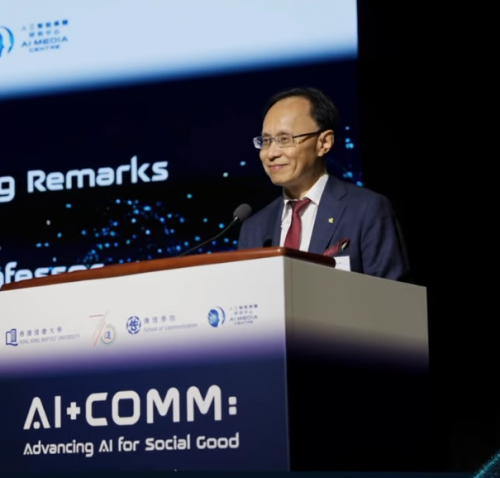
Professor Zhong attending the UNESCO conference for Information for All Programme (IFAP).
Findings have been presented at leading venues including the Conference on Health IT and Analytics in Washington D.C., the 16th and 17th UN Internet Governance Forums in Poland and Ethiopia, the China Crohn's & Colitis Foundation Meeting, and the Guangzhou International GI Summit, described as "China's leading gastroenterology forum for clinicians and experts from around the world."
"We are building a future where every patient with a chronic illness has the knowledge, trust, and support needed to thrive, and not just survive. Communication cannot replace medical care, but in many cases, it may function like a medical intervention. This is the impact we are determined to scale worldwide," Professor Zhong concludes.
Professor Zhong's research profile: Bu ZHONG - Hong Kong Baptist University