
HKBU and collaborators discover gut-derived molecule that suppresses autoimmune uveitis
Autoimmune uveitis (AU) is a leading cause of blindness among working-age adults. Conventional treatment relies on glucocorticoids, which offer limited efficacy and carry serious side effects such as bone deterioration and blood sugar irregularities, while newer biological agents remain prohibitively expensive for many patients. A multi-institutional study led by Hong Kong Baptist University (HKBU), the University of Hong Kong, and Shanghai Jiao Tong University School of Medicine has uncovered a fundamentally new therapeutic approach. The findings were published online in Cell Death & Differentiation in March 2026.
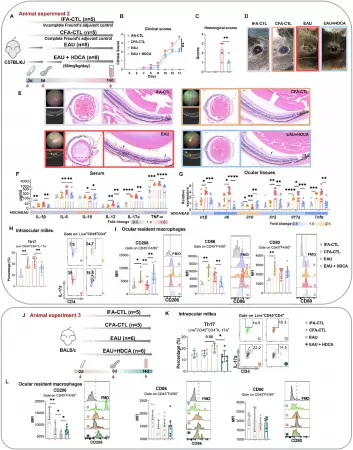
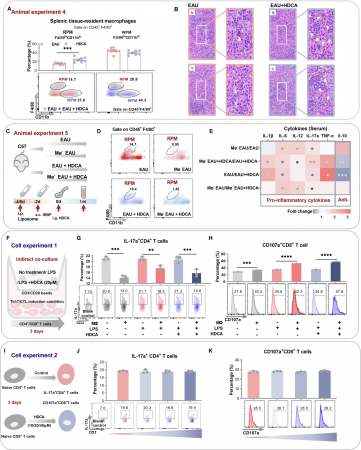
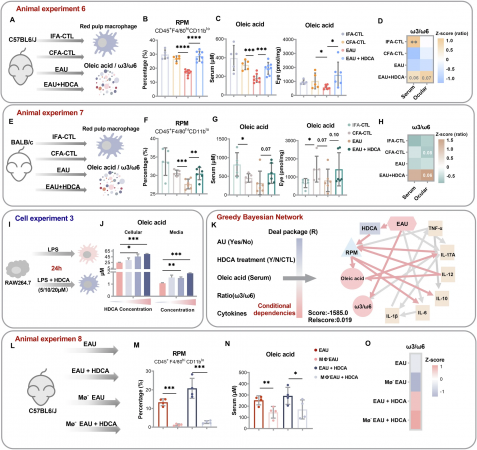
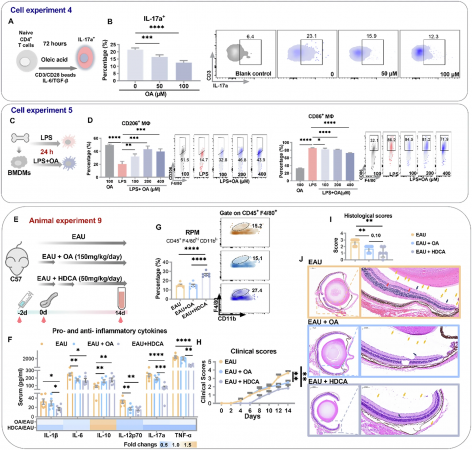
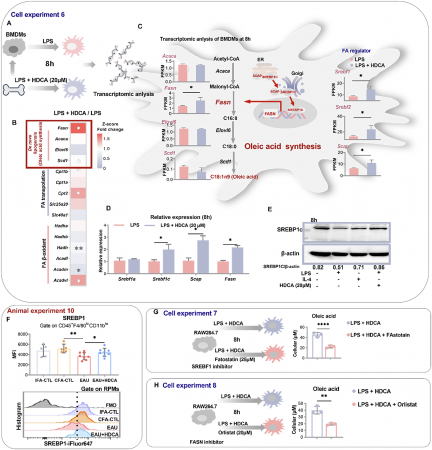
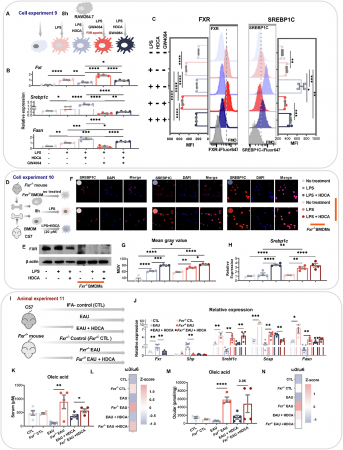
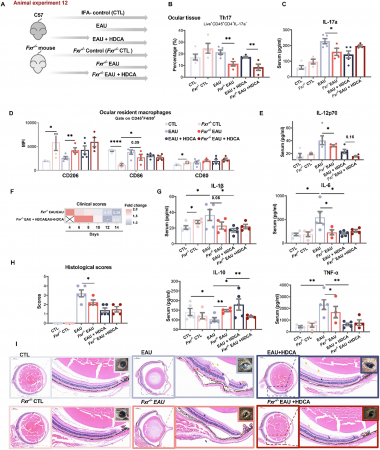
Through metabolomic profiling of serum samples from 90 clinical participants, the team discovered for the first time that a gut-derived secondary bile acid — hyodeoxycholate (HDCA) — and oleic acid (C18:1n9) are severely depleted in AU patients. Animal experiments confirmed that oral HDCA administration significantly alleviates eye inflammation in experimental uveitis mice, reducing pro-inflammatory cytokines such as IL-1β and IL-6 while elevating anti-inflammatory IL-10. Mechanistically, HDCA accumulates efficiently in the spleen, where it inhibits the Farnesoid X Receptor (FXR) and activates SREBP1c-dependent fatty acid synthesis in splenic red pulp macrophages, boosting oleic acid production. The oleic acid then travels through the bloodstream to suppress pathogenic Th17 cell differentiation and promote anti-inflammatory M2 macrophage polarisation in the eye, establishing a novel "gut–spleen–eye" immunometabolic axis.
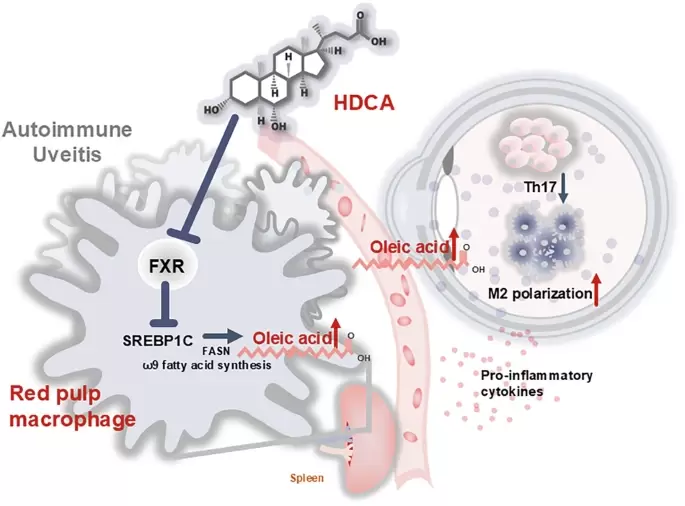
"Gut–spleen–eye" immunometabolic axis schematic diagram.
As an endogenous metabolite, HDCA offers distinct therapeutic advantages — precision targeting, a strong safety profile, oral administration, and low production costs — positioning it as a promising treatment for uveitis and other autoimmune diseases. The research team is now advancing preclinical safety evaluations and formulation development, with the aim of initiating clinical trials at the earliest opportunity.
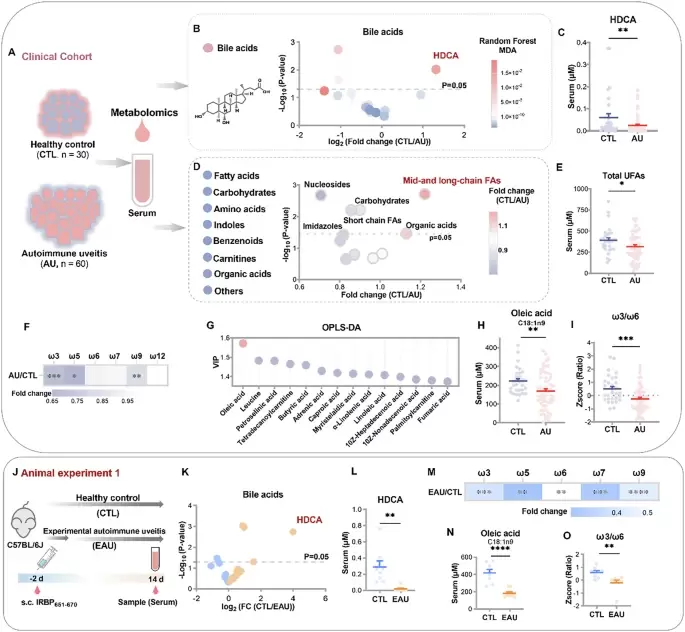
Cross-species AU metabolomics reveals HDCA and oleic acid deficits.
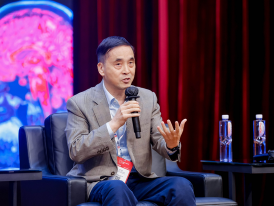
The study was co-led by Professor Lyu Aiping, Vice-President (Research and Development) and Chair Professor at HKBU's School of Chinese Medicine, and Professor Jia Wei, Chair Professor at the University of Hong Kong's Li Ka Shing Faculty of Medicine, as co-corresponding authors. Mr Li Yitao from HKBU's School of Chinese Medicine served as co-first author. The research was supported by the Hong Kong Research Grants Council's General Research Fund and the Shanghai Science and Technology Innovation Action Plan.
Professor Lyu and Professor Jia have been sharing a commitment to translating metabolomics into therapies for disease, grounded in the traditions of Chinese medicine. At its core, their collaboration centres on using metabolomics to identify small molecules such as bile acids and develop precision therapies for metabolic disorders, cancer, and other diseases. Professor Jia is currently a Visiting Chair Professor at HKBU, sustaining a productive partnership that exemplifies the strength and enduring impact of HKBU's Health and Drug Discovery interdisciplinary research cluster.
Full research : Gut-derived hyodeoxycholate reprograms the spleen–eye immunometabolic axis to suppress autoimmune uveitis | Cell Death & Differentiation