

Peking University’s Prof Deng Xingwang shares how precision breeding and the 'Xiashan Model' can feed the future
As the world faces mounting challenges from climate change, population growth, soil degradation, and water scarcity, ensuring a sustainable food supply and producing more nutritious food has become one of the defining issues of our time.
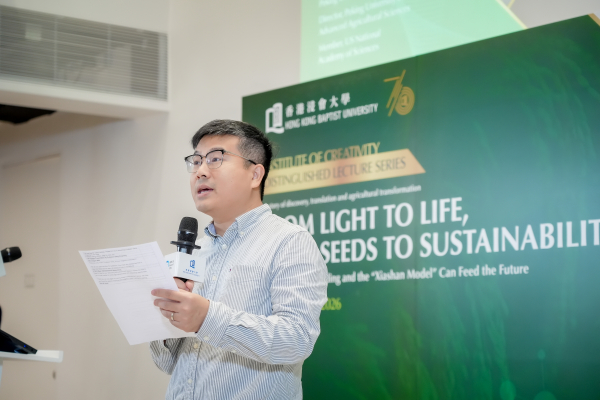
On 6 October 2026, Hong Kong Baptist University (HKBU) welcomed world-famous plant biologist Professor Deng Xingwang, Director of the Peking University Institute of Advanced Agricultural Sciences (PKU-IAAS) and a member of the US National Academy of Sciences, to lecture on how precision breeding can address food security challenges by improving crop yield, quality, and resilience.
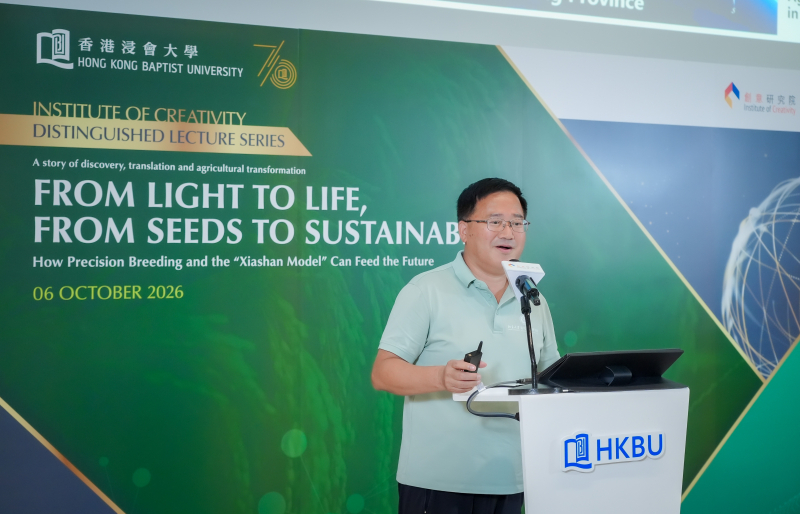
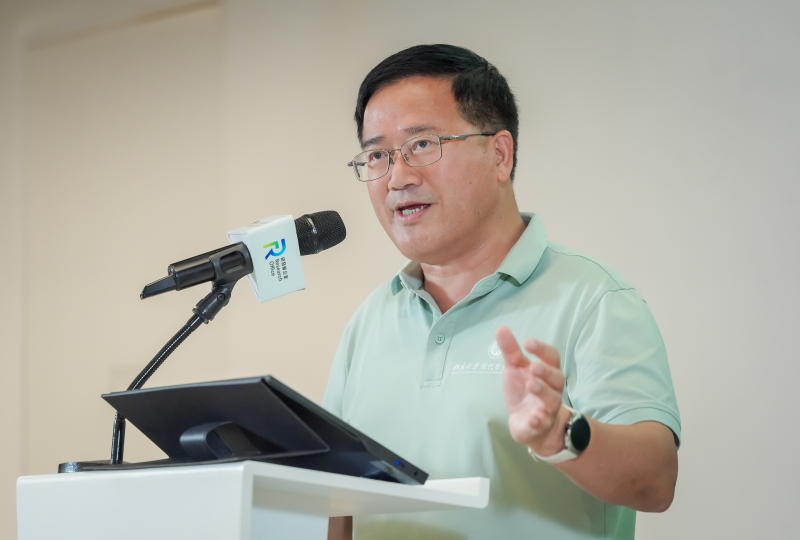
World-renowned plant biologist Professor Deng Xingwang, University Endowed Professor of Peking University, Director of the Peking University Institute of Advanced Agricultural Sciences (PKU-IAAS) and a member of the US National Academy of Sciences
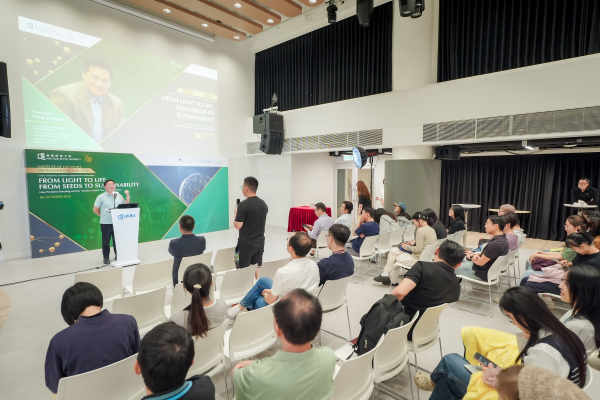
Jointly hosted by HKBU's Institute of Creativity and the Department of Biology, the lecture, entitled "From Light to Life, From Seeds to Sustainability: How Precision Breeding and the 'Xiashan Model' Can Feed the Future", commenced with welcoming remarks by Professor Li Jianming, Chair Professor in Biology and Head of Department. Professor Li described Professor Deng, formerly a Yale University professor, as a role model who has demonstrated what Chinese scientists can accomplish on the international stage.
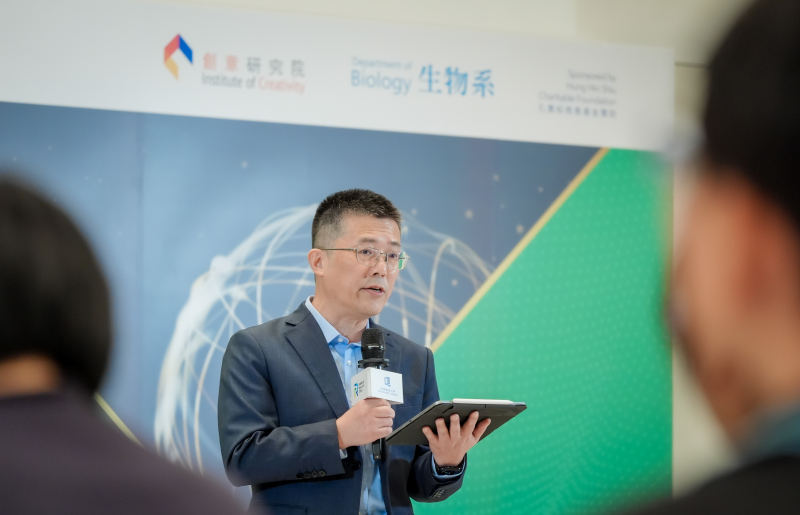
In his welcoming remarks, Professor Li Jianming, Head and Chair Professor of the Department of Biology, lauds Professor Deng’s pioneering research on light signalling and photomorphogenesis
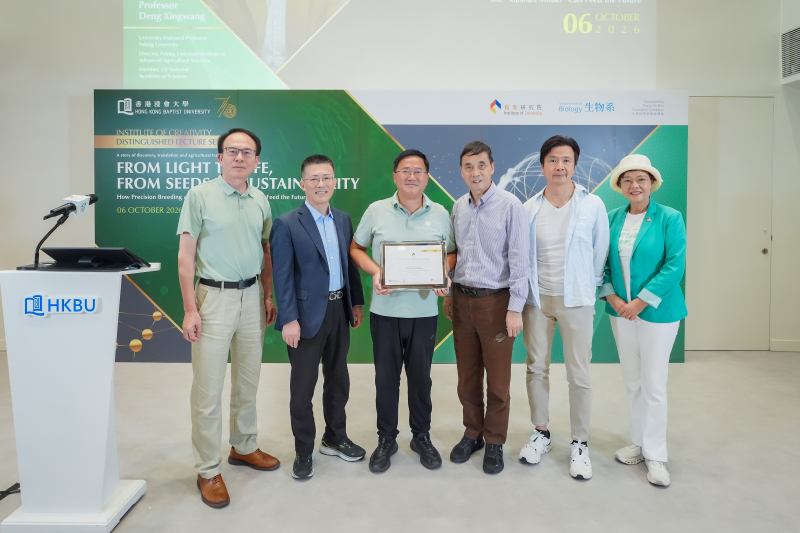
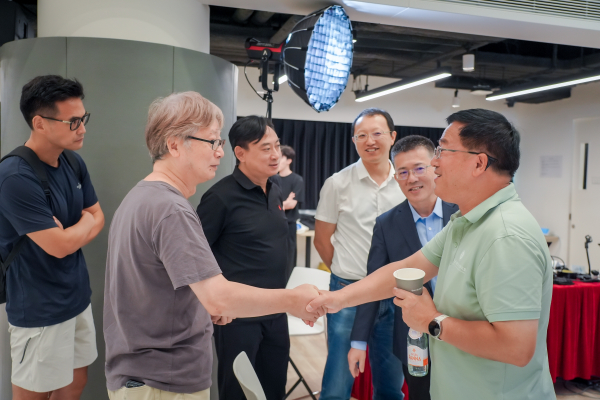
Professor Lyu Aiping (3rd from right), Vice-President (Research and Development) cum Dean of Graduate School, presents a souvenir to Professor Deng together with Professor Li Jianming, Professor Li Min (1st from right), Chair Professor in Chinese Medicine and Dean of the School of Chinese Medicine, Professor Chris Wong (2nd from right), Chair Professor in Environmental Science and Associate Dean (Transdisciplinary Development) of the Faculty of Science and Technology, and Professor Xia Yiji (1st from left), Chair Professor in Biology, Department of Biology
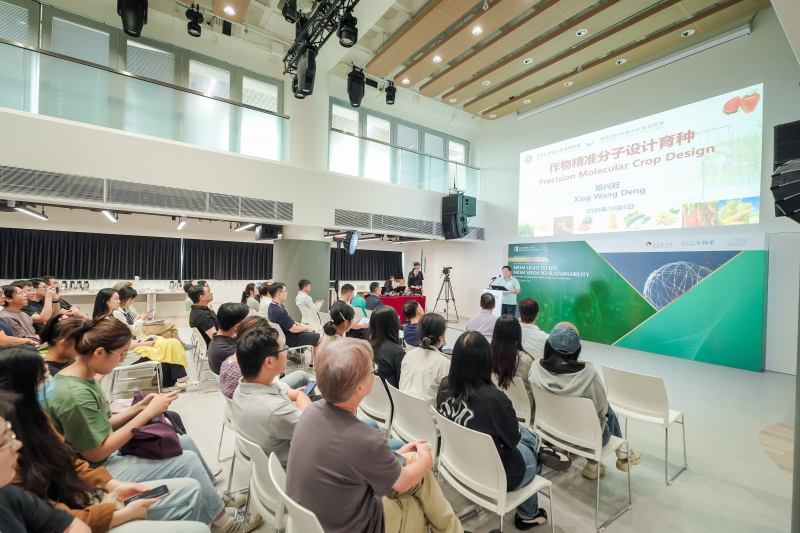
Professor Deng, who is also University Endowed Professor at Peking University (PKU), explained some of the precision molecular crop design research projects carried out by the researchers at the PKU-IAAS. Based in Xiashan District, Weifang City, Shandong Province, the Institute was established by PKU and the local government with the objective of connecting cutting-edge scientific research with real agricultural needs.
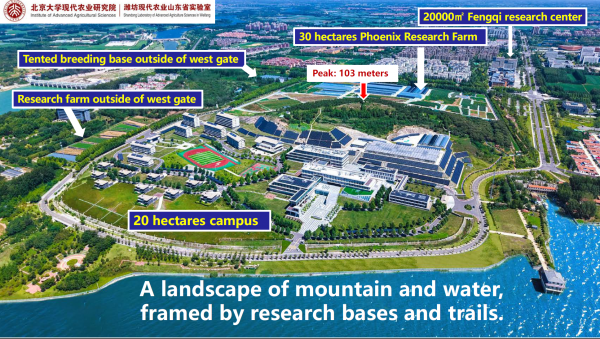
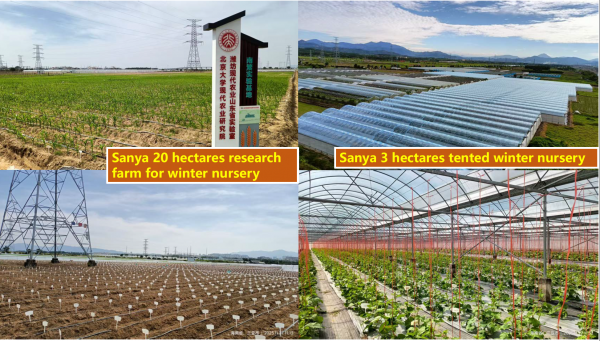
During the lecture, Professor Deng introduces the research bases in Weifang, Shangdong Province and the research farms in Sanya [Photo courtesy: Professor Deng Xingwang]
By combining genomics, biotechnology, bioinformatics, and precision breeding technologies, researchers alter gene activity in selected germplasms of crops and create improved crop varieties, addressing practical challenges faced by farmers, such as disease susceptibility, drought stress, crop quality, and yield limitations.
“Despite the farmer having the best variety, after a couple of years, they always find some weaknesses, such as disease resistance and drought tolerance. We take those issues and they become our projects,” said Professor Deng. “We can quickly make some changes in one or two particular genes, making them more or less active and giving the desirable traits to the farmers.”
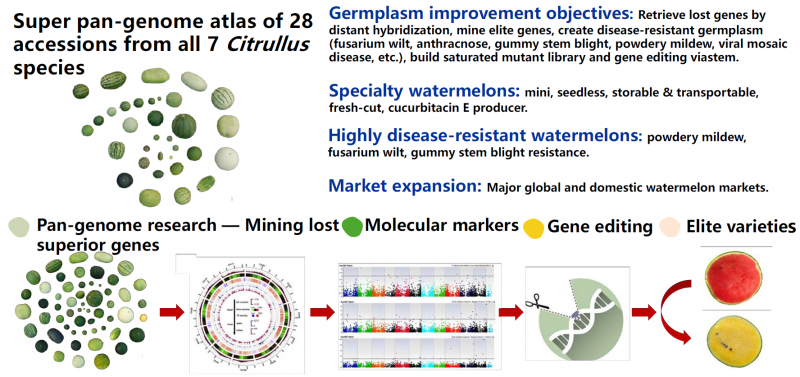
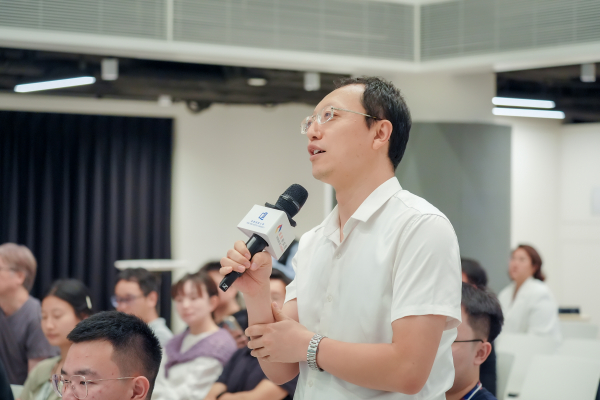
Professor Deng also shares their research on watermelon with the audience [Photo courtesy: Professor Deng Xingwang]
One of the institute's most notable successes has been its research on watermelon. Professor Deng’s team was the first in the world assembling the complete telomere-to-telomere (T2T) gap-free watermelon reference genome. They later carried out pangenome analysis to identify genes that are missing in the domesticated watermelon but exist in its progenitors.
“We sorted out all the genes that are in the wild species, but not in the domesticated cultivars. And it happens that some of those genes encode important traits like disease resistance,” he said, adding that they are now working on developing more resilient watermelon varieties with the research findings.
These new varieties developed by the institute are recognised in major industry competitions and deliver strong market performance due to their flavour, shelf life and commercial value, demonstrating how scientific innovation can directly benefit growers, retailers, and consumers.
Wheat is another major focus of the institute. Professor Deng explained that modern wheat breeding has been constrained by limited genetic diversity, making crops increasingly vulnerable to diseases and environmental pressures.
“If we know there’s a good gene, we can use inter-species or inter-genera hybridisation to move the gene into the current wheat. The difficult part is to find or discover genes present in wheat wild relatives.”
To address this challenge, researchers have been investigating wheat's ancestral and wild relatives to identify useful genes associated with disease resistance, stress tolerance, and yield improvement. The institute is also developing a new generation of hybrid wheat, which will bring commercially viable varieties to market in the near future.
Beyond watermelon and wheat, it has also achieved significant progress in numerous crops, including cabbage, cucumbers, grapes, kiwi fruit, peppers, raspberries, soybean, strawberries, and tomatoes, developing dozens of new crop varieties and securing numerous patents, as well as producing internationally recognised research in plant biology and agricultural science.
Professor Deng emphasised that developing superior crop varieties is only the first step. Through demonstration farms, collaboration with local governments, partnerships with industry, and support for researcher-led start-ups, the institute aims to ensure that scientific advances are rapidly adopted by farmers and integrated into agricultural production systems. This is what he calls the “Xiashan Model”.
“Getting a good variety is not enough if society can’t use it. We figured a way of working with the local government to demonstrate how to cultivate in a way that you can actually get a decent financial payback.”
He added: “We also encourage our researchers to start their own companies to commercialise their varieties. [Several researchers] have set up local joint ventures. Hopefully, these will benefit society as soon as possible.”