


Beyond the stage: How HKBU's AI and immersive performance research influenced Hong Kong's HK$100M art-tech agenda
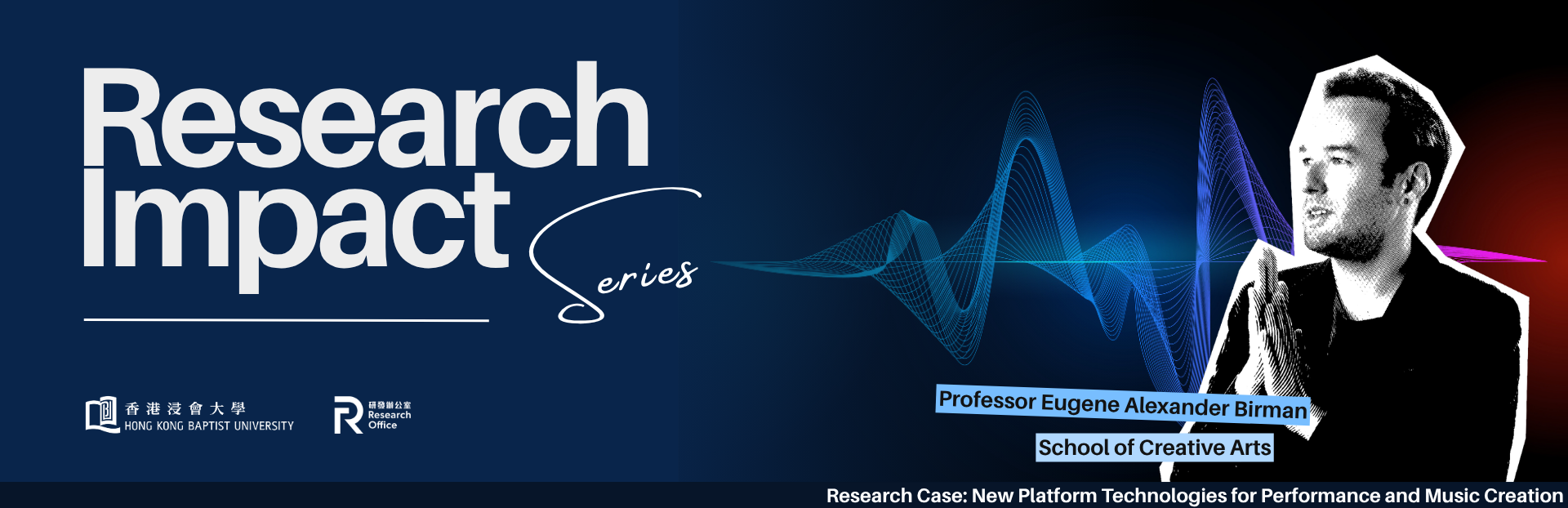
Since 2018, Professor Eugene Alexander Birman and his colleagues, Professor Johnny Poon and Professor Roberto Alonso Trillo, have blended AI, holography, and immersive media to reimagine live performance. Their work has reached over 500,000 listeners and viewers worldwide, influenced creative practices across the globe, and contributed to policy discussions behind Hong Kong's HK$100 million art-technology investment—proving that performance is no longer bound by physical stages alone.
Key Impacts:
- 6 YEARS of interdisciplinary research
- 500,000+ audiences reached worldwide
- HK$100M government investment in art-tech
- 4+ major productions blending AI, holography, and immersive media
- Global impact on creative practices and policy conversations
When the pandemic brought concert halls and theatres around the world to a standstill, it also accelerated a question that had already been quietly surfacing across the performing arts: what happens when performance is no longer bound by physical space alone?
At Hong Kong Baptist University (HKBU), Professor Eugene Alexander Birman and collaborators across music, creative media, and technology have spent the past several years rethinking what performance can look and feel like in an increasingly digital reality.
The performing arts are entering a period of enormous transformation; what matters is making sure technology remains connected to the shared human experience.
Professor Eugene Alexander Birman
School of Creative Arts
Since 2018, their interdisciplinary research into new platform technologies for music creation and performance has produced experimental pieces that bring together AI, immersive media, and live performance, while influencing creative practices and broader conversations around the wider development of Hong Kong’s art-tech ecosystem.
Over the past several years, their research has reached more than half a million listeners and viewers globally through live performances, digital platforms, and public-facing initiatives.
“We are building a meaningful partnership of human and AI creativity,” explains Professor Birman. “This symbiotic approach unlocks new artistic possibilities, allowing us to craft powerful, multi-sensory musical experiences that engage audiences in profoundly unprecedented ways. At its best, it allows us to create experiences that feel more immersive, and, ultimately, more human.”
The work of Professor Birman, Professor Johnny Poon, and Professor Roberto Alonso Trillo appeared through HKBU’s Creative Media and Practice Research Cluster (CMPRC), established in 2018 as a space for experimentation across music, performance, and creative technology. Researchers collaborating in composition, immersive media, machine learning, and performance design explored next to one another how technology could move past being a production tool and become part of the artistic expression itself.
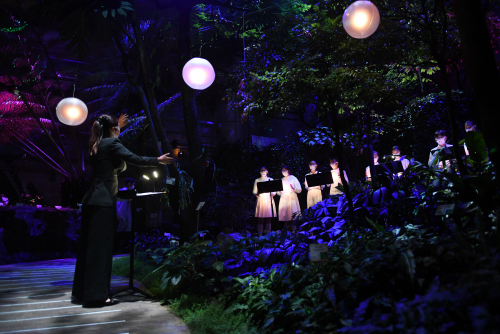
One of the project’s most widely recognised compositions, ARIA, came out during the height of the pandemic. Blending live music with holography, virtual reality, and environmental data, the production reimagined the traditional operatic experience as something far more immersive and fluid. Rather than remaining seated in a conventional auditorium, audiences moved through the work itself, between shifting environments and holographic performers beside live singers, creating what the Financial Times dubbed “a Covid-proof opera for our times”.
Still, the project was never conceived as a temporary solution to a moment of crisis. “The pandemic forced a lot of people in the performing arts to rethink what performance could be,” says Professor Birman. “We became interested in whether technology could create forms of connection and immersion that weren’t simply digital replicas of live performances, but experiences in their own right.”
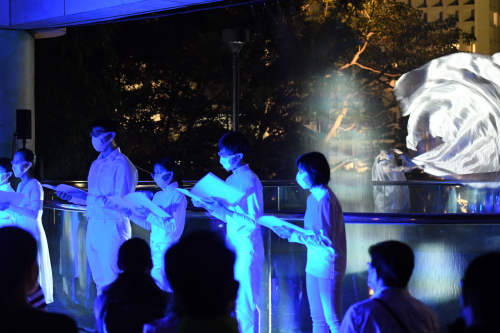
Subsequent projects pushed these ideas further. The Once and Future combined live music, immersive film, laser technology, and interactive digital environments to explore how artificial intelligence might exist within a performance not merely as a technical system, but as a visible interpretive presence alongside the audience itself. During the pandemic, the team also developed Project Labyrinth, an interactive online video game that extended outside the theatre, and found new ways for audiences to engage with live performance remotely.
As well as the performances, the research also led to the development of experimental software systems exploring how AI might define creativity and live performance. Projects such as Demiurge and Archon led by Professor Roberto Alonso Trillo, investigated how intelligent systems could respond to performers and environments in real time, while broader research considered how machine learning is beginning to transform the creative process itself.
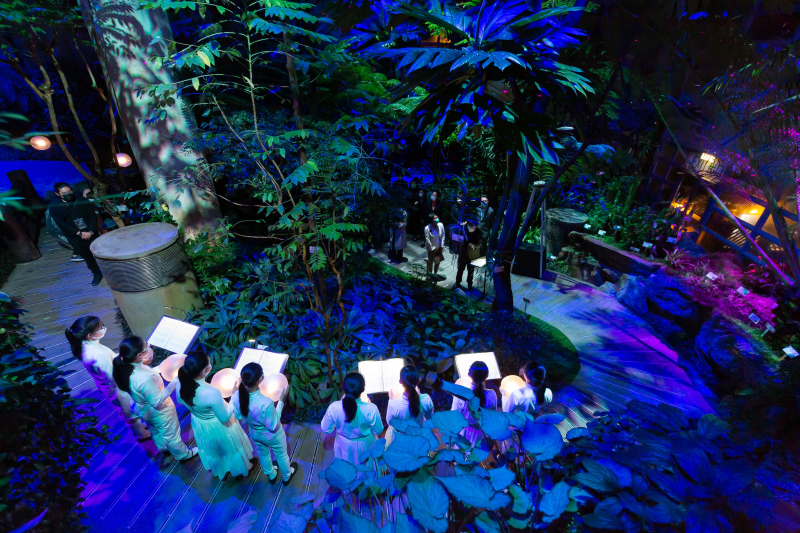
More importantly, the impact of the research has extended well beyond institutional grounds. Artists, curators, and institutions worldwide reported lasting changes in their own creative and curatorial practices after engaging with the piece. Composer Dariush Derakhshani, for instance, reflected that participating in the Debris project fundamentally changed his compositional process, leading him to embrace externally sourced and machine-mediated sound as a structural element in his works.
Hong Kong curator and experimental musician Kung Chi Shing, also reflected on how the project reframed his thinking around technologically mediated performance, and later informed programming decisions for the West Kowloon Freespace Noise Fest festival.
The research also became part of broader conversations about the future of art-tech in Hong Kong. Corroboration documents submitted as part of the impact case study point to HKBU’s research and infrastructure planning as having helped shape policy discussions surrounding the sector ahead of the Hong Kong government’s landmark HK$100 million investment into art technology announced in the 2020 Policy Address.
At the same time, it has also translated into industry through spin-off companies and knowledge-transfer initiatives centred on creative technology and digital performance tools.
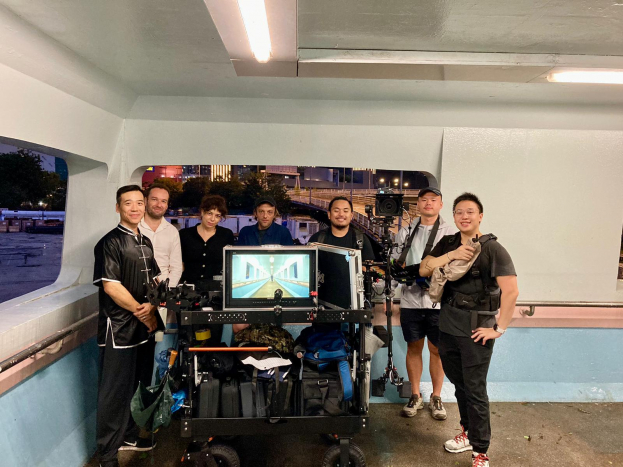
For HKBU, the research reflects a broader institutional investment in interdisciplinary creative practice and emerging forms of cultural production. In recent years, the University has also expanded its facilities for music and the performing arts significantly, with the Creative Hub and new specialised spaces supporting immersive performance research.
“The performing arts are entering a period of enormous transformation; what matters is making sure technology remains connected to the shared human experience,” says Professor Birman. “That’s where research becomes important, because it gives us the space to experiment critically, creatively, and collaboratively before these technologies become fully embedded in the cultural fabric.”
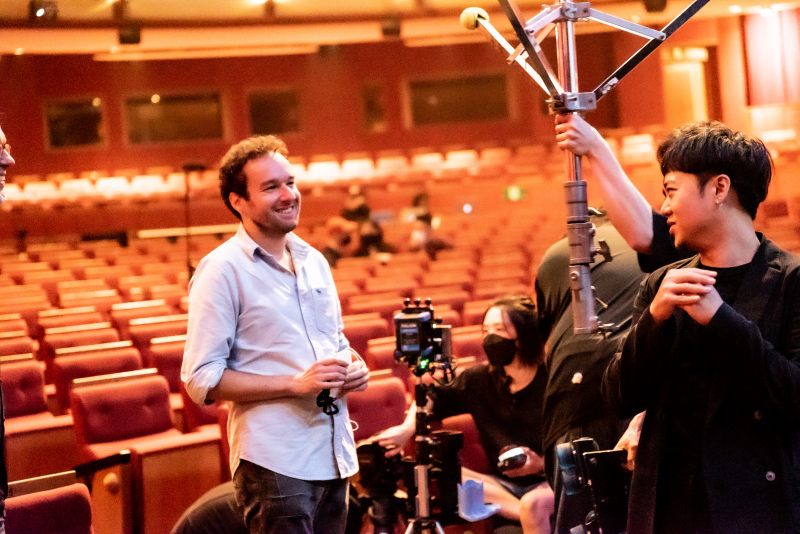
As artificial intelligence continues to reinvent creative industries globally, the achievements at HKBU indicate a future in which performance is no longer confined to the boundaries of a stage or a single physical location. Instead, it becomes increasingly immersive, adaptive, and interconnected to open up new possibilities for audiences to encounter music, storytelling, and one another.
Professor Birman’s research profile: Eugene Alexander BIRMAN - Hong Kong Baptist University
下一則新聞
29.06.2026